The well of chance (Pseudoscience)
A novel by Tracey-anne
Hi everyone ;0)
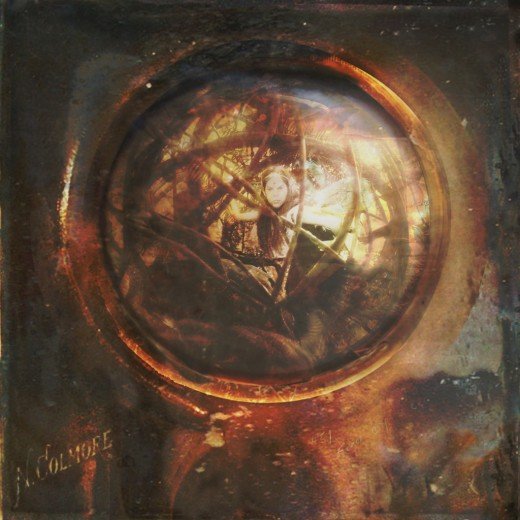
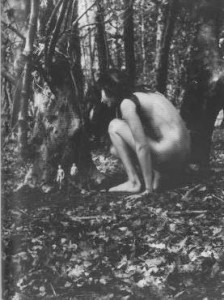
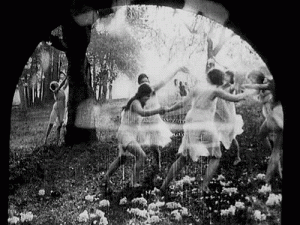
Today I am sharing with you some images that
I manipulated via my inspiration boards
over at Pinterest adapted for personal, inspiration use only.
I played around with the images to get the feel of how I see the
'Well of chance' in my mind when writing...
I hope that you too can feel the imagery :0)
This is a rather long post as I have included some lore.
So perhaps grab a cup of tea,
sit in a pretty, comfortable chair and enjoy x
Please note:
All original non-edited images and their artists
can be found by visiting these boards links below:
I send them all a huge thank you for creating imagery that totally inspires!
Now I hope we are all aware that in truth the fae DO NOT have wings and are not the demure, miniature fae often portrayed by media...but please do not feel discouraged, faery lore relates to all...x

The fae are a mythical race that many feel are
the original beings from fabled Atlantis that traveled to Ireland.
A type of Avalonion race where healing, nature and peace was in tune.
They possessed a knowledge of which is now sadly lost in time.
This knowledge enabled them to manipulate the elements in our world.
Were they as lore suggests able to travel here from another world to ours?
Did our wise women gain some of that valuable knowledge, a fae gift?
Where are they now?
In 'The well of chance' water is the main elemental channel used by the fae.
So below I have included some valuable information about water.

Magical importance:
Elemental Water
The human body contains from 55% to 78% water, depending on body size.
Water covers 70.9% of the Earth's surface,
Water appears in nature in all three common states of matter
and may take many different forms on Earth:
water vapor and clouds in the sky; seawater in the oceans; icebergs
in the polar oceans; glaciers and rivers in the mountains;
and the liquid in aquifers in the ground.
Much of the universe's water is produced as a byproduct of star formation.
When stars are born, their birth is accompanied by a strong outward wind of gas and dust.
When this outflow of material eventually impacts the surrounding gas,
the shock waves that are created compress and heat the gas.
The water observed is quickly produced in this warm dense gas.
Water has been detected in interstellar clouds within our galaxy, the Milky Way.
Water probably exists in abundance in other galaxies, too, because its components,
hydrogen and oxygen, are among the most abundant elements in the universe.
Interstellar clouds eventually condense into solar nebulae and solar systems such as ours.

Water is one of the four classical elements along with
fire, earth and air, and was regarded as
Water is considered a purifier in most religions.
Major faiths that incorporate ritual washing (ablution) include Christianity,
Hinduism, Islam, Judaism, Rastafari movement, Shinto, Taoism, and Wicca.
Immersion (or aspersion or affusion) of a person in water is a
central sacrament of Christianity (where it is called baptism);
it is also a part of the practice of other religions, including Islam (Ghusl),
Judaism (mikvah) and Sikhism (Amrit Sanskar).
In addition, a ritual bath in pure water is performed for
the dead in many religions including Islam and Judaism.
In Islam, the five daily prayers can be done in most cases after
completing washing certain parts of the body using clean water (wudu).
In the Qur'an it is stated that "Living things are made of water"
and it is often used to describe paradise.

Human consciousness has an effect on the molecular structure of water.
High-quality water forms beautiful and intricate crystals,
while low-quality water has difficulty forming crystals.
Positive changes to water crystals can be achieved through prayer,
music, or by attaching written words to a container of water.
Water has been here, a gift to us since the beginning of time.
Many of us take water for granted,
never realizing its healing properties, nor honoring its sacredness.
Our ancients used ' Healing wells' and in my story the fae are the bestirs
via the blessing/tending of these wells to enable our health.
I also use water as a transportation between the worlds.

Elemental fire
Fire has been an important part of all cultures and religions
from pre-history to modern day and was vital to the development of civilization.
It has been regarded in many different contexts throughout history,
but especially as a metaphysical constant of the world.
Fire is one of the four classical elements in ancient Greek philosophy and science.
It was commonly associated with the qualities of energy, assertiveness,
and passion. In one Greek myth, Prometheus stole fire from the gods
to protect the otherwise helpless humans, but was punished for this charity.
Fire was one of many archai proposed by the Pre-socratics,
most of whom sought to reduce the cosmos, or its creation, by a single substance.
It is said that fire gave rise to the other three elements.
Heraclitus regarded the soul as being a mixture of fire and water,
with fire being is the more noble part and water the ignoble aspect.
The goal of the soul is to be rid of water and become pure fire:
the dry soul is the best and it is worldly pleasures make the soul "moist".
The word agni is Sanskrit for fire, cognate with Latin ignis (the root of English ignite).
Philosophus (4=7) is the elemental grade attributed to fire;
this grade is also attributed to the Qabalistic Sephirah Netzach and the planet Venus.
The elemental weapon of fire is the Wand or Dagger.
Each of the elements has several associated spiritual beings.
The archangel of fire is Michael, the angel is Aral, the ruler is Seraph,
the king is Djin, and the fire elementals (following Paracelsus) are called salamanders.
Fire is considered to be active; it is represented by the symbol for Leo and it is referred to the lower right point of the pentacle in the Supreme Invoking Ritual of the Pentacle.

Travel of energies - portals
In physics, energy is an indirectly observed quantity
that is often understood as the ability of a physical system to do
work on other physical systems.Since work is defined as a force
acting through a distance (a length of space),
energy is always equivalent to the ability to exert pulls
or pushes against the basic forces of nature,
along a path of a certain length.
The concept of energy emerged out of the idea of vis viva (living force).
The total energy contained in an object is identified
with its mass, and energy cannot be created or destroyed.
When matter (ordinary material particles) is changed into energy
(such as energy of motion, or into radiation),
the mass of the system does not change through the transformation process.
A system can transfer energy to another system by simply
transferring matter to it
(since matter is equivalent to energy, in accordance with its mass).
The kinetic energy of an object is the energy
which it possesses due to its motion.
In cosmology and astronomy the phenomena of stars, nova,
supernova, quasars and gamma ray bursts are the universe's
highest-output energy transformations of matter.
All stellar phenomena (including solar activity)
are driven by various kinds of energy transformations.
Energy transmigration is a concept of moving between different points
in time in a manner analogous to moving between different points in space.
A molecular vibration occurs when atoms in a molecule are in periodic motion
while the molecule as a whole has constant translational and rotational motion.
The frequency of the periodic motion is known as a vibration frequency.
Vibrational healing works with the frequecy/movement/sound.
Resonating tones change as they are moved and sounded over the body,
indicating blocks in a persons energy field.
Once the blocks have been identified, the vibrational sound waves
produced by instruments/song are used to clear
and re-balance the energy in the person’s body.
It is said that the fae use this for healing, hence their beautiful music.
Once heard one can not wait to hear again as produces euphoria.
There are whispers that vibration is used to help
with transportation in the fae portals.

Fire
Fire in Tarot symbolizes conversion or passion.
Many references to fire in tarot are related to the usage
of fire in the practice of alchemy,
in which the application of fire is a prime method of conversion,
and everything that touches fire is changed, often beyond recognition.
The symbol of fire was a cue pointing towards transformation,
the chemical variant being the symbol delta,
which is also the classical symbol for fire.
Fire represents the creativity and passion that all intellectual and emotional beings have.
It is an active force that has the passion to create and animate things.
The element is also very rational and quick to flare up as is the
personality of many fire-children.
Fire in many ancient cultures and myths has been known to purify the land
with the flames of destruction, however, it is also capable of the renewal of life
through the warmth and comfort of those very same flames.
The element of fire shows up in mythological stories all across the world,
often in stories related to the sun.

Faery the Aos Si
In Celtic folklore, the Irish: leannán sí "Barrow-Lover"
(Scottish Gaelic: leannan sìth; Manx: lhiannan shee)
is a beautiful woman of the Aos Sí (people of the barrow or the fairy folk)
who takes a human lover. Lovers of the leannán sídhe are said to live brief, though highly inspired, lives.
The name comes from the Gaelic words for a sweetheart, lover,
or concubine and the term for a barrow or fairy-mound.
The leanan sídhe is generally depicted as a beautiful muse,
who offers inspiration to an artist in exchange for their love and devotion.

Fairies inhabit a kingdom called Fairyland, Elphame, or the Otherworld.
This realm is not separate from ours, but overlays it,
unseen except in special circumstances.
Fairies are occasionally glimpsed in our world, but usually only in the blink of an eye or on the edge of dreams. However, there are places where the two worlds sometimes meet; natural power spots, bridges between the worldswhere people have occasionally slipped from the everyday world into Fairyland,
perhaps walking into the mist between two old stones, or stepping accidentally into a fairy ring, only to find themselves in a kingdomwhere it is always summer, where the orchards bear apples and
flowers at the same time, and where death and old age are unknown.

Air element
Air is often seen as a universal power or pure substance.
Its supposed fundamental importance to life can be seen in words such as aspire,
inspire, perspire and spirit, all derived from the Latin spirare.
Air is one of the four classical elements in ancient Greek philosophy and science.
According to Plato, it is associated with the octahedron;
air is considered to be both hot and wet. The ancient Greeks used two words for air: aer meant the dim lower atmosphere, and aether meant
the bright upper atmosphere above the clouds.
The four elements were arranged concentrically around the center
of the universe to form the sublunary sphere. According to Aristotle,
air is both hot and wet and occupies a place between fire and water
among the elemental spheres.
Aristotle definitively separated air from aether.
Aristotle definitively separated air from aether.
For him, aether was an unchanging, almost divine substance that was found only in the heavens, where it formed celestial spheres.
In ancient Greek medicine, each of the four humours became associated
with an element. Blood was the humor identified with air, since both were hot and wet.
Other things associated with air and blood in ancient
and medieval medicine included the season of spring, since it increased the qualities of heat and moisture; the sanguine temperament
(of a person dominated by the blood humour); hermaphrodite (combining the masculine quality of heat with the feminine quality of moisture);
and the northern point of the compass.

The mirror as a portal to another dimension....
If you believe the mirror to be a gateway to another location -
and truly expect that to happen, Wiccans warn that protective rituals
should be performed to prevent negative spirits from remaining in the home. You should not attempt to communicate with spirits using a mirror as a portal, unless you know what you are doing and are properly protected.
Mirrors are one of the simplest and yet most effective tools for developing psychic skills for divination and magic.
Mirror work trains the inner eye to perceive the unseen.
The power of mirrors – or any reflective surface – to reveal what is hidden has been known since ancient times. Gazing upon shiny surfaces is one
of the oldest forms of scrying, a method of divination practiced by the early Egyptians,
Arabs, the Magi of Persia, Greeks and Romans. In ancient Greece,
the witches of Thessaly reputedly wrote their oracles in human blood upon mirrors.
The Thessalian witches are supposed to have taught Pythagoras how to divine by holding a magic mirror up to the moon.
Romans who were skilled in mirror reading were called specularii.
The tool of scryers, called a speculum.
The oldest and most common speculum is still water in a lake,
pond or dark bowl. Ink, blood and other dark liquids were used by Egyptian scryers.
Medieval European adepts used mirrors, bowls of water, polished stones
and crystals. Nostradamus scryed with a bowl of water set upon a brass tripod. The inside of the bowl was painted black. He would dip a wand into the water and anoint himself with a few drops, then gaze into the bowl until he saw visions. In folklore, mirrors have a dark power – they are held to be a soul stealer.
A widespread folk belief calls for turning over the mirrors in a house when someone dies. If a dead person sees himself in a mirror, his soul will become lost or have no rest. The power of mirrors to suck out souls
is illustrated in the Greek myth of Narcissus, who sees his reflection in water and then pines and dies.Folklore also has it that mirrors should be removed from a sick room because the soul is more vulnerable in times of illness.
It is considered unlucky for the sick to see their reflections, which puts them at risk of dying. Breaking a mirror is bad luck; since it holds the soul, a broken mirror will damage the soul.
It is also considered unlucky to look into a mirror at night or by candlelight, for one will see otherworldly beings. It’s good to know the history and lore of mirrors.
When properly used in the spirit of the highest good, mirrors are a great magical aid, not something to be feared.
It is said that the fae taught the chinese people the technique for making mirrors.
The Chinese magic mirror is an ancient art that can be traced back to the Chinese Han Dynasty (206 BCE – 24 CE). The mirrors were made out of solid bronze.
The front is a shiny polished surface and could be used as a mirror,
while the back has a design cast in the bronze.
When bright sunlight or other bright light reflects onto the mirror, the mirror seems to become transparent. If that light is reflected from the mirror towards a wall, the pattern on the back of the mirror is then projected onto the wall. In about 800 CE, during the Tang Dynasty (618-907), a book entitled Record of Ancient Mirrors described the method of crafting solid bronze mirrors with decorations, written characters, or patterns on the reverse side that could cast these in a reflection on a nearby surface
as light struck the front, polished side of the mirror; due to this seemingly transparent effect, they were called 'light-penetration mirrors' . A mercury amalgam was laid over the surface; this created further stresses
and preferential buckling. The result was that imperfections of the mirror surface matched the patterns on the back, although they were too minute to be seen by the eye. But when the mirror reflected bright sunlight
against a wall, with the resultant magnification of the whole image, the effect was to reproduce the patterns as if they were passing through the solid bronze by way of light beams.

In my story the main character works in an old bookshop.
She lives in the flat above the bookshop.
This is where she encounters a seelie type of fae.
Her first meeting with an unseelie was while out with friends,
however she was not aware of this being an otherworldly encounter.

The fae enjoy the arts, in my story they reside in an abandoned theatre while in our realm.
In Ireland and scotland, many pipers and fiddlers learnt their songs
or even their trade from the Fairies.
Fairies are fond of dancing and playing music.
The fairies are passionately fond of music;
it is therefore dangerous for a young girl to sing when she is all alone by the lake,
for the spirits will draw her down to them to sing to them in the fairy palace
under the waves, and her people will see her no more.
Yet sometimes when the moonlight is on the water,
and the waves break against the crystal columns of the fairy palace
far down in the depths, they can hear her voice, and they know that she is
singing to the fairies in the spirit land beneath the waters of the lake.
In the first instance, a simple person, usually with no formal education or particular talents, is journeying home at night. He decides to sleep in a faerie rathand is mysteriously awoken. Beside him he finds a book,
a pen, and a fiddle which have been left by the faeries.
By expressing interest in the book, the person is given the gift of poetry; the pen signifies the gift of prose while the fiddle bestows the gift of music. The faeries must get something in return however and after choosing, the pen usually leaps up blinding the person in one or both eyes.
In the second version, the person is sleeping in the rath and is awoken by faeries who invite him/her into the fort, through a secret door, to attend a dance.
The person must be careful not to eat or drink as this will entrap him as one of the faerie folk and he will be permanently lost from the human world. During the night, he is offered either a book, a pen or a fiddle
with the same results as in the first version of the motif. The Eleven/fae kind are great adepts in music and dancing,and a great part of their times seems to be spent in the practice of these accomplishments.
The changeling has often been detected by his fondness for them.
Elfin music is more melodious than human skill and instruments can produce, and there are many song and tunes which are said to have been originally learned from the Fairies. One musical instrument of the Elves is the bagpipes, and some of the most celebrated pipers in Scotland are said to have learned their music from them.

Aura
An aura is a field of subtle, luminous radiation surrounding a person
or object (like the halo or aureola in religious art). The depiction of such an aura
often connotes a person of particular power or holiness.
Sometimes, however, it is said that all living things (including humans)
and all objects manifest such an aura. Often it is held to be perceptible,
whether spontaneously or with practice: such perception is at times linked
with the third eye of Indian spirituality.
Various writers associate various personality
traits with the colors of different layers of the aura.
It has also been described as a map of the thoughts and feelings
surrounding a person.
In Iran the aura is known as farr or "glory":
it is depicted in association with Zoroastrian kings.
The Buddhist flag represents the colours seen around the enlightened Buddha.
The symbolism of light found in the Bible is at times associated
with the idea of the aura or "body of light"
In the classical western mysticism of neoplatonism and Kabbalah the aura
is associated with the lustre of the astral body, a subtle body identified
with the planetary heavens, which were in turn associated with various mental
faculties in an elaborate system of correspondences
with colours, shapes, sounds, perfumes etc.
Each colour of the aura has a meaning, indicating a precise emotional state.
A complete description of the aura and its colours was provided by
Charles Leadbeater, a theosophist of the 19th century.
For holistic healers, aura reading is the art of investigating the human energy field,
or the energy fields of other sentient beings.
It is a basis for using techniques of holistic healing,
and includes such practices as bioenergetics, energy medicine,
energy spirituality, and energy psychology.

Transportation
Since humans have no way of knowing how to do this,
it falls upon fae folk to aid them, and we hesitate.
First of all, not all of us can help humans as we require permission.
It also takes longevity, knowledge, and experience in the arts of Transmutation and Transformation before one of us is able to make the journey to your realm.
When we venture from our dimension into yours, these powers strengthen.
Once a human enters the realm of Faerie, they would have to remain here for a long enough period of time (our time is not the same as yours) to absorb our substance, this enables you to return home.
It takes seven human years for a human body to heal from the transportation phase and fully absorb our substance for travel.
As you can see, this is highly complicated. And so not often done.
For human kind it is not often remembered either -- it's as if it happened in a dream.
When a human returns to his/her own dimension their physicality will slowly re-form itself back to the ways of their world. But something of Faerie may linger forever --and just what, differs with each human, leaving a memory vague and haunting. The fae cannot go into further detail about their ways. It would be a breach of their deeper secrets.

Mist is a phenomenon of small droplets suspended in air.
The only difference between mist and fog is visibility.
Mist makes a beam of light visible from the side
via refraction and reflection on the suspended water droplets.
"Scotch mist" is a light steady drizzle.

Kirlian photography
a technique that measures the “auras” of a living being.
Kirlian photography is a collection of photographic techniques
used to capture the phenomenon of electrical coronal discharges in the
presence of moisture. It is named after Semyon Kirlian, who, in 1939 accidentally discovered that if an object on a photographic plate is connected to a high-voltage source, an image is produced on the photographic plate. The technique has been variously known as "electrography"
Kirlian photography does not require the use of a camera or a lens because it is a contact print process.
A typical demonstration used as evidence for the existence of these energy fields involved taking Kirlian contact photographs of a picked leaf at set intervals. The leaf's gradual withering was thought to correspond witha decline in the strength of the aura. In some experiments, if a section of a leaf was torn away after the first photograph, a faint image of the missing section would remain when a second photograph was taken.

If you are upset, stressed, or sick, you can stand in a hot shower,
and wash your frustrations, sickness or woes away.
If you are ill, picture your sickness, the germs and disease or infection,
washing down from the top of your head all the way to your toes and down the drain.
If you are stressed, stand with your back facing the shower head.
Tilt your head back just far enough so that the water is running down
right at the top of your forehead line, then slowly move your head foward,
letting the water hit the top of your head, then slowly to the back of your head,
to the base of your skull, down your neck, to your spinal column,
all the way down, slowly, each vertebrae, down to your buttocks,
your legs, calves and feet. All of this is done in a slow motion,
as the water passes each point, you will feel a tingling, or energy sensation.
This sensation is unblocking most of your chakras, releasing tension,
balancing and nourishing your body. If you still feel out of whack,
repeat again, slowly. Let the water massage you, heal you, nurture you.
Sometimes when you are upset, you cry in the shower/bath, its a place of sanctuary.
Let your tears and sadness wash down the drain.
By the time my shower is through, the stress is gone, and so is the sadness.
Its at this time you can face and logically handle the situation that made you sad.
Water has a way of enveloping us into its spirit, like our mothers arms,
warm and loving, water caresses us, cradles us within its power.

Fairy Sight
a folklore spell
You will need the following items for this spell:
A Hollyhocks bud
A Marigold bud
A wild-thyme bud
Some young hazel buds (qI rocomend
Grass from an ant hill
Oil (Of your choice, I sujest Olive Oil)
A small Container
A Hawthorn Tree
Casting Instructions for 'Fairy Sight Spell'
Put all the buds together in a mortar and crush them,
after they have been crushed add the grass and crush some more until it is all mixed.
Then place the bud an grass mixture in the container add enough oil so the mixture floats.
Close the container and shake it then leave it in the sun for three days.
Then at twilight (Fairy Time) get the mixture
(after its three days in the sun)
and rub yours eyes with it.
Then say firmly and clearly:
"Here I be, Under the Hawthorn tree.
Come out from the hill and let me see"
Caution: The Fae tend to get agrivated from being summoned.

What is a Twin Flame?
Twin flames, also called twin souls, are literally the other half of our soul.
We each have only one twin, and generally after being split
the two went their separate ways, incarnating over and over to gather
human/living being experience before coming back together.
Ideally, this happens in both of their last lifetimes on the planet so they can ascend together.
So you probably haven't had many lifetimes with your twin.
Each twin is a complete soul, not half a soul.
It is their task to become more whole, balancing their female and male sides,
and ideally become enlightened, before reuniting with their twin.
This reunion is of two complete and whole beings.
All other relationships through all our lives could be said to be "practice"
for the twin, the ultimate relationship.

Otherworldly
In physics, a wormhole is a hypothetical topological feature of spacetime
that would be, fundamentally, a "shortcut" through spacetime.
The various universes within the multiverse are sometimes called parallel universes.
Multiple universes have been hypothesized in cosmology, physics,
astronomy, religion, philosophy, transpersonal psychology and fiction,
particularly in science fiction and fantasy.
In these contexts, parallel universes are also called "alternative universes",
"quantum universes", "interpenetrating dimensions", "parallel dimensions",
"parallel worlds", "alternative realities", "alternative timelines",
and "dimensional planes," among others.
Fairies are powerful beings. According to lore, they work tirelessly in their
respective realms to ensure harmony of the cosmic whole.
Their magic is associated with luck, fortune and healing.
But cross a fairy and they may turn their magic against you.
Fairies are powerful beings. According to lore, they work tirelessly in their
respective realms to ensure harmony of the cosmic whole.
Their magic is associated with luck, fortune and healing.
But cross a fairy and they may turn their magic against you.

Unseelie
The Unseelie Court consists of the malicious and evilly-inclined fairies.
Unlike the Seelie Court, no offense is necessary to bring down their assaults.
As a group (or "host"), they appear at night and assault humankind,
often carrying them through the air, beating them, and forcing them to commit
such acts as shooting elfshot at their friends.
Like the beings of the Seely Court who are not always benevolent,
neither are the fairies of the Unseelie Court always malevolent.
However, when forced to choose,
they will always prefer to harm—rather than to help—humans.
This was not always the case, but due to the deception and
harm humankind caused, the unseelie' natural instinct of defense
took over their kindness. They have always been the more
aggressive in manner than the unseelie.
Initially they were the protectors of the realm,
hence this emotion that runs deep.
Annwn or Annwfn or Annwvyn was the Otherworld in Welsh mythology.
Annwn or Annwfn or Annwvyn was the Otherworld in Welsh mythology.

There have always been legends of fairies; they exist in every country of the world. The people of ancient Greece and Rome worshipped the nymphs of meadows, streams and mountains, and the dryads who lived in trees.

Air
words for air (Vāyu) or wind (Pavana) it is one of the Panchamahābhuta
the "five great elements" in Hinduism. The Sanskrit word 'Vāta' literally means "blown", 'Vāyu' "blower", and 'Prāna' "breathing" (viz. the breath of life, the *an- in 'animate').Air is not one of the traditional five Chinese classical elements. Nevertheless, the ancient Chinese concept of Qi or chi is believed to be close to that of air. The element air also appears as a concept in the Buddhist religion which has an ancient history in China.
Some Western modern occultists equate the Chinese classical element of metal with air, others with wood due to the elemental association of wind and wood in the ba gua.
The elemental weapon of air is the dagger which must be painted yellow with magical names and sigils written upon it in violet.Each of the elements has several associated spiritual beings.
The archangel of air is Raphael, the angel is Chassan, the ruler is Aral, the king is Paralda,
and the air elementals (following Paracelsus) are called sylphs.Air is considerable and it is referred to the upper left point of the pentagram in the Supreme Invoking Ritual of the Pentagram.
Each element is associated with one of the cardinal points.
Enlil was the god of air in ancient Sumer.
Shu was the ancient Egyptian god of air and the husband of Tefnut, goddess of moisture.
In East Asia, air is seen as the equivalent of wood.
Air is represented in the Aztec religion by a snake to the Scythians,
a yoke to the Hindus and for Greeks as a sword and in Christian iconography as mankind.

Earth Element
Air was commonly associated with qualities of heaviness,
matter and the terrestrial world.
In Classical Greek and Roman myth, various goddesses represented the Earth,
seasons, crops and fertility, including Demeter and Persephone;
Ceres; the Horae (goddesses of the seasons), and Proserpina;
and Hades (Pluto) who ruled the souls of dead in the Underworld.
In ancient Greek medicine, each of the four humours became associated with an element.
Black bile was the humor identified with earth, since both were cold and dry.
Other things associated with earth and black bile in ancient
and medieval medicine included the season of fall, since it increased the qualities
of cold and aridity; the melancholic temperament
(of a person dominated by the black bile humour);
the feminine; and the southern point of the compass.
In alchemy, earth was believed to be primarily cold, and secondarily dry,
(as per Aristotle). Beyond those classical attributes, the chemical substance salt,
was associated with earth and its alchemical symbol was
a downward-pointing triangle, bisected by a horizontal line.

Earth
Prithvi (Sanskrit: pṛthvī, also pṛthivī) is the Hindu earth and mother goddess. According to one such tradition, she is the personification of the Earth itself; according to another, its actual mother, being Prithvi Tattwa,
the essence of the element earth. As Prithvi Mata, or "Mother Earth", she contrasts with Dyaus Pita, "father sky". Zelator (1=10) is the elemental grade attributed to earth; this grade is also attributed to the Qabalistic sphere Malkuth.The elemental weapon of earth is the Pentacle.
Each of the elements has several associated spiritual beings.
The archangel of earth is Uriel, the angel is Phorlakh, the ruler is Kerub,
the king is Ghob, and the earth elementals (following Paracelsus)
are called gnomes. Earth is considered to be passive; it is represented by
the symbol for Taurus, and it is referred to the lower left point of
the pentagram in the Supreme Invoking Ritual of the Pentagram.
In East Asia, metal is sometimes seen as the equivalent of earth
and is represented by the White Tiger (Chinese constellation).
Earth is represented in the Aztec religion by a house; to the Hindus,
a lotus; to the Scythians, a plough; to the Greeks, a wheel;
and in Christian iconography by a bull.

Seelie fae
The Seelie court are known to help humans,
and to warn those of whom have accidentally offended the fae,
They return human kindness with favors of their own.
Such as knowledge for the wise woman, providing healing waters to bathe and drink from,
and maybe to visit their world ( upon return many years have passed in the human realm).
A fairy belonging to this court will however still avenge insults
and could be prone to mischief in the human realm.
The most common time of day to see them is twilight.
The Seelie were more the nobile class,
but now the unseelie have their high nobles too.
This change happened with their so called departure from our world.


Here in Britain, both the ancient Celts and Anglo-Saxons believed in such beings,
a faith that has had a lasting legacy up until the present day.
The Celtic name for fairies is sidhe, a word that means a burial mound,
hill or earth barrow, since this is where many fairies are presumed tolive.
It is said that when the Celts invaded Ireland, the resident people,
the Tuatha Dé Danaan of whom had supernatural powers,
were forced to retreat into the hollow hills and were only occasionally seen after that.
They are very tall and thin, eternally young and beautiful in appearance,
and generally dressed in white. The Anglo-Saxon term for similar spirits is
elf or aelf, a word meaning something like 'white spirit', or 'shining spirit'.
They are tall and beautiful and shine with a kind of inner light.
They also live in mounds, and people left offerings, called elf blots,
of meat and milk on the mounds for them.

Fae Glamour
Glamour is used by the fae male/ female,
it creates an awe like presence and intense attraction.
Attracting humankind of the opposite sex to the fae.
Have you ever been around a woman/man of whom did nothing but walk in the room,
and people flocked too her/him seemingly drooling?
This Is Glamour.
The fae can use it to get what they want, if they are trained in the ways of using their Glamour. If not they are out puting the signal. They also may use Glamour too make people avoid them and get the hell out of their way. This is called Repel. Instead of making their aura reel people in, they taint the aura with angry energy and push it out in a manvolent manner if they feel they are in danger or being threatened. This is used more by the Unseelie.

If a Fae shares something with you, and they go out of their way to do so, then please listen, and do not repeat. You don't have to believe what they say, but be cautious of the unseelie. Some un/seelie follow their own paths but do not make their own laws. You have to understand that faery kin are VERY DIFFERENT than most humans you interact with everyday. They have a destiny they are working towards.
If you are a newly awakened fae (ie you share lineage). Please do not play around with glamour, it is extremely dangerous.... like a love spell that can go haywire if not controlled or disciplined properly. Just because you feel like a God/dess it does not give you permission to act like one. Glamour is a gift and Can be revoked from you by a full blooded fae. It is used mainly for Protection, enabling a low profile and to help Kin identify one another. The fae sense each other's glamour and presence like a radar. The unseelie Fae have Shadowy type auras..Flickering shadows, their aura is a dark Colored Hue.. Some unseelie fae may be adept at shielding their normal aura colour and projecting one that is full of light, but a seelie fae knows how to probe and the unseelies exposed show a shadow underneath the light were the True aura is.

Credendo Vides ( By Believing One Sees )
The faery say - We fae folk also fall in love. Our race, as you may know, is formed from energy as is yours and all living beings. Emotions are energy ( reference to the word as e-motion -- energy in motion). Our emotions are therefore extremely intense, coming deep from within our being. Happiness and joy, love, even at times anger too. We have the same type of physical forms as humans, although our general dna is structured slightly differently we are physically compatible.
The faery say - We fae folk also fall in love. Our race, as you may know, is formed from energy as is yours and all living beings. Emotions are energy ( reference to the word as e-motion -- energy in motion). Our emotions are therefore extremely intense, coming deep from within our being. Happiness and joy, love, even at times anger too. We have the same type of physical forms as humans, although our general dna is structured slightly differently we are physically compatible.

The most evolved of the fae are able to incorporate all aspects of the four elements. Wings are symbolic of air, legs of earth, their shimmering qualities of fire,and a shape shifting aspect represents water's fluidity.

Literally stones with natural holes in i.e. made by nature by crashing together along a sea bed with water rushing past and then through them creating the holes. Holey stones have been used for thousands of years for 3 main purposes, depending on your beliefs and also where you live.
The 3 main uses are:
Healing – It is said that someone wearing a holey stone around their neck will be cured of any disease. You can also rub a healing stone over an affected wound or painful joint to ease the pain and aid healing.
Protection – holey stones have been used for many years in the South West of England to protect people against Witchcraft and Witches, and yes it is even still used to this day on fishing boats for this very reason.
However it used to protect anyone against negative forces. A common place to hang them is over windows and doors. They are also said to protect you against nightmares so hanging one above
your bed or on your bedstead would also be good.
To see Fairies – Legend says that if you hold a holey stone up to your eye and look through it you can see creatures that you cannot normally see, such as Fae folk.

Once there was a great bard who was called Thomas the Rhymer. He lived at Ercildoune (Earlston), in Berwickshire, during the thirteenth century. It is told that he vanished for seven years, and that when he reappeared he had the gift of prophecy. Because he was able to foretell events, he was given the name of True Thomas.
All through Scotland, from the Cheviot Hills to the Pentland Firth,
the story of Thomas the Rhymer has long been known.
During his seven years' absence from home be is said to have dwelt in fairyland. One evening, so runs the tale, he was walking alone on the banks of Leader Water when he saw riding towards him the Fairy Queen on her milk-white steed, the silver bells tinkling on its mane, and the silver bridle jingling sweet and clear. He was amazed at her beauty, and thinking she was the Queen of Heaven, bared his head and knelt before her as she dismounted, saying:
"All hail, mighty Queen of Heaven! I have never before seen your equal."
Said the green-clad lady: "Ah! Thomas, you have named me wrongly. I am the Queen of Fairyland, and have come to visit you."
"What seek you with me?" Thomas asked.
Said the Fairy Queen: "You must hasten at once to Fairyland, and serve me there for seven years."
Then she laid a spell upon him, and he had to obey her will. She mounted her milk-white steed and Thomas mounted behind her, and they rode off together. They crossed the Leader Water, and the horse went swifter than the wind over hill and dale until a great wide desert was reached. No house nor human being could be seen anywhere. East and west, north and south, the level desert stretched as far as eye could see. They rode on and on until at length the Fairy Queen spoke, and said:
"Dismount, O Thomas, and I shall show you three wonders."

Fairy Music
The influence of the fairy glamour does not kill,
but it throws the object into a death-like trance,
in which the real body is carried off to their realm,
while a creature can be left in its place, clothed with the shadow of the stolen form.
Young women, remarkable for beauty, young men, and handsome children,
are the chief victims of the fairy stroke.
The girls are wedded to fairy chiefs, and the young men to fairy queens;
and if the mortal children do not turn out well, they are sent back,
and others carried off in their place. It is sometimes possible,
by the spells of a powerful fairy-man, to bring back a living being from Fairy-land.
But they are never quite the same after. They have always a spirit-look,
especially if they have listened to the fairy music.
For the fairy music is soft and low and plaintive,
with a fatal charm for mortal ears.
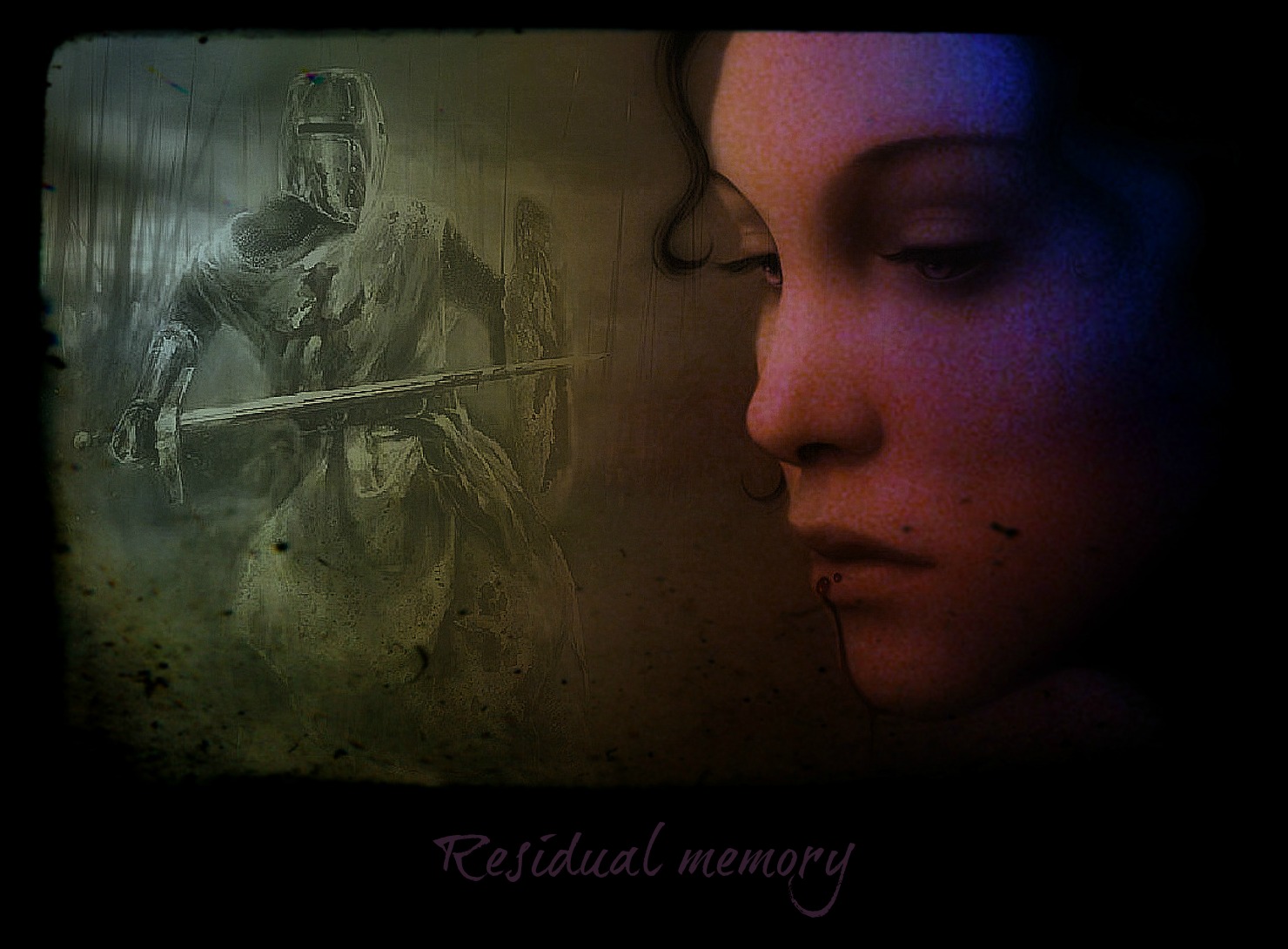
Residual memory
Residual memory, unlike instinct,
is memories directly passed through generations or progeny.
Also it could be memories from past lives.
The idea of residual memory is that certain things are not learned
as instinct they are part of your genetic make up or
a part of your parents genetic make up that you remember.

Folklore holds that fairies cannot be seen or noticed in any way unless they
want you to observe them. Thats true to some extent, but developing fairy
sight, the ability to perceive fairies, is easier than one might think.
Many people think fairies are tiny beings with wings, stories of the fae
in all shapes and sizes, from small balls of light to little humanoid beings to towering,
angelic figures. There are different races of fairies, just as there are different races
of humans but remember they can change their appearance,
it is a form of deception.
Their true image is the one most resembling the human
with an almost what we call angelic apparition.
Knowledge about fairies and the ability to discern them is useful
in personal spiritual work and also in paranormal investigations.
They can appear and disappear like apparitions. In natural settings,
a strong fairy presence can contribute to a haunted atmosphere.
If you learn how to tune into them, fairies will distinguish themselves
from other entities present, and this information will be conveyed to you intuitively.
In earlier times, contacting fairies was not seen as a desirable activity.
Fairies were believed to be dangerous and unpredictable, even hostile toward humans.
They might kidnap you, bewitch you, play tricks on you or steal your children,
still remain cautious the seelie especially can be malicious.
Special psychic gifts are not necessarally required to perceive fairies.
They show up when you're in harmony with your environment and universal laws .
We often would not notice them because we do not know how to look for them,
or we dismiss the fae as our lore or figments of our imagination.
They may be right in front of us, would you know?
Fairies often make themselves known as sparkling balls of light.
I have tried to show examples via the images on this post.
Be aware of silvery-white/coloured glow lights that either float
or shoot around slow then quick,
it means they know you noticed their aura in this realm.
You can improve your own ability to perceive fairies by meditating on a
regular basis, which expands your consciousness into the unseen realms.
This is a part of faery universal law, the opening of ones mind.
Enhance the senses by emptying the mind, feel not think.
The presence of iron will send the fae away, iron saps their strength
and repels them. keep iron objects away from known fae areas.

When the Summer Fairy Raid is coming, the people hang branches of rowan over their doors and round their rooms, and when the Winter Raidis coming they hang up holly and mistletoe as protection from attack;
for sometimes the fairies steal pretty children while they lie fast asleep,and carry them off to Fairyland, and sometimes they lure away pipers and bards, and women who have sweet singing voices.

Flower Essences
Flower remedies are dilutions of flower material,
dew found on flower petals retain healing properties of that plant.
The remedies are intended primarily for emotional and spiritual conditions,
including but not limited to depression, anxiety, insomnia and stress.
The remedies contain a very small amount of flower material
in a 50:50 solution of brandy and water. Because the remedies are extremely
diluted they do not have a characteristic scent or taste of the plant.
It is claimed that the remedies contain "energetic" or "vibrational"
nature of the flower and that this can be transmitted to the user.
Flower remedies are considered vibrational medicines,
and rely on a concept of water memory.
Remedies are usually taken orally.
Some recommend dowsing to select a remedy.
The best known flower remedy by a humankind Bach
is the Rescue Remedy combination,
which contains an equal amount each of Rock Rose, Impatiens, Clematis,
Star of Bethlehem and Cherry Plum remedies.
The product is aimed at treating stress, anxiety, and panic attacks,
especially in emergencies. people say he watched the fae collecting and drinking dew!

Crystal Memory
Since ancient times, quartz crystals have been used to heal and
balance the body and mind. Although this is a well-known
and documented fact, only recently have discoveries in science and
metaphysics given these ritualistic, eccentric fields a definite systematic basis.
Quartz crystals have six remarkable features.
They are able to organize, accumulate, amplify, concentrate,
communicate and transform energy and information.
Quartz will transmit information to a glass of water if it is brought
into physical contact with the water.
Once imprinted, information will remain for an indefinite
amount of time and literally become a personal applicator for individual use.
The Apophyllite crystal is commonly used by humankind to enhance the memory.
Working with the Third-Eye and Crown Chakras,
Apophyllite can activate these energy centers to improve one's reception,
processing, and storing of vibrational information.
Primarily a spiritual crystal,
Apophyllite supports one's intuition,
helping one to not only remember something,
but to also intuitively verify that information as well.
Epidot is popular for it's abilities to increase the energies near it,
and improve one's memory. Prehnite is known as a stone of intuition,
that can enhance perception. Together,
Prehnite with Epidot makes a powerful combination for improving the memory.
This combination stone is also known to carry powerful healing energies as well.
Emerald is well-known for it's ability to improve one's memory
and mental clarity. An aid for discerning truth,
Emerald is also used frequently to attract prosperity
via an improved inner connection to the natural cycles of the Universe,
which can help one to learn how to manage synchronicities.
Emerald is also an excellent healing crystal, great for body layouts.
Light also makes for a terrific carrier of information
—witness the prevalence of fiber optics in telecommunications
—and the realm of quantum communication is no different.
Photons are key quantum objects that can carry information over
large distances and that can be entangled in relatively large numbers.

Do you know why the witch spells require hair/nails/etc?
Your DNA is forever held in hair and nails, and they do not die.
They will continue to hold all your energy/blue print.
A very powerful love spell the unseelie fae have used on humans is below.
This spell was used by a half fae/half human kind who shared this power
with a faery witch/wise woman during ancient times. She later undid
the spell secretly, as binding another without permission is not following
the 'harm ye none' practice that the seelie court follow.
Gather a few strands of a beings hair and on the new moon,
braid this hair together with a lock of yours and a red silk thread
(or the fae actually prefer leather thread).
Fasten the ends together to form a circle. Place braid in a locket or a small
red silk bag and put it away somewhere safe. This binds that person to you.
Please note that to break the spell you untie the braid and hair.
When the female fae enter our world some tend to colour their hair in
pastel/muted shades pink/blues. They like the attention although
they are meant to keep a low key.
So usually they will be the unseelie kind.
They like to defy the seelie rules as independant from seelie court now.
That is another tale to tell at a later date.

Books of knowledge:
In folkloristics, a myth is a sacred narrative usually explaining
how the world or humankind came to be in its present form,
although, in a very broad sense, the word can refer to any traditional story.
Lebor Gabála Érenn
It is usually known in English as The Book of Invasions or
The Book of Conquests, and in Modern Irish as Leabhar Gabhála Éireann or Leabhar Gabhála na hÉireann.
Recounting the mythical origins and history of the Irish from the creation of the world down to the Middle Ages. An important record of the folkloric history of Ireland.
The Mabinogion
The Mabinogion is the title given to a collection of eleven prose stories
collated from medieval Welsh manuscripts. The tales draw on pre-Christian
Celtic mythology, international folktale motifs, and early medieval historical traditions.
While some details may hark back to older Iron Age traditions,
each of these tales is the product of a highly developed medieval Welsh narrative tradition,
both oral and written. Lady Charlotte Guest in the mid 19th century
was the first to publish English translations of the collection,
popularising the name "Mabinogion" at the same time.
This contains The Four Branches of the Mabinogi.
The word "Mabinogi" originally designated only these four tales,
which are really parts or "branches" of a single work,
rather than the whole collection.
The tales contain most of what is recorded of Welsh mythology.
The tales, which are outwardly concerned with the lives of various Welsh royal families
- figures who represent the gods of an older, pre-Christian mythological order
- are themselves much older in origin.
Preserved in written form in the White Book of Rhydderch (1300-1325) and the Red Book of Hergest (1375-1425), portions of the stories were written as early as the second half of the 11th century, and some stories are much older still.
The tales themselves are concerned with the themes of fall and redemption, loyalty, marriage, love, fidelity, the wronged wife, and incest. They're set in a bizarre and magical landscape which corresponds geographicallyto the western coast of south and north Wales, and are full of white horses that appear magically, giants, beautiful, intelligent women and heroic men.
The Secret Commonwealth Of Elves, Fauns And Fairies, originally written in 1691
THOUSANDS of words have been written about the Rev Robert Kirk, the 17th-century minister who wrote a pamphlet about the lifestyle of the faeries and as a result, an often told story has it, they spirited him away. Mr Kirk was a very clever man, a university graduate and a Gaelic scholar, and although he believed the Christian God overcame pagan belief, he gives the impression that accepting that much of the vibrant faery lore current in his time was the norm. He said faeries had "light changeable bodies, somewhat of the nature of a condensed cloud and best seen in twilight".
It is from this older, oral tradition of story telling that many of the
fantastic and supernatural elements of the tales have come.
Myths typically involve supernatural characters and are endorsed by rulers or priests.

The Fairy Queen or Queen of the Fairies was a figure from English folklore who was believed to rule the fairies.
In Irish folklore, the last High Queen of the Daoine Sidhe -
and wife of the High King Finvarra - was named Oona
(or Oonagh, or Una, or Uonaidh etc.). In the ballad tradition of Northern England
and Lowland Scotland, she was called the Queen of Elphame.
The character is also associated with the name Morgan
(as with the Arthurian character of Morgan Le Fey, or Morgan of the Fairies), Meave, and L'annawnshee (literally, Underworld Fairy). In the Child Ballads Tam Lin and Thomas the Rhymer, she is represented as both beautiful and seductive...Faery glamour!

Faery enchantment, a magical spell, charm or bewitchment.
Such as faery glamour.
The sense of Wonder (emotion) / Delight.

Fairy rings occupy a prominent place in European folklore as the location of gateways into elfin/fae kingdoms, or places where elves gather and dance. According to the folklore, a fairy ring appears when a fairy or elf appears. It will disappear without trace in less than five days,
but if an observer waits for the elf to return to the ring, he or she may be able to capture it.

Fairy forts (also known as raths from the Irish referring to an earthen mound) are the remains of lios (ringforts), hillforts or other circular dwellings in Ireland. From (possibly) late Iron Age to early Christian times.Tradition claimed that ringforts were "fairy forts" imbued with Druids' magic and believers in the fairies did not alter them. The early pre-Celtic inhabitants of Ireland (known as the Tuatha Dé Danann and Fir Bolg) came to be seen as mythical and were associated with stories of fairies, also known as the "Good People".
Fairy forts and prehistoric Tumuli were seen as entrances to their world. Even cutting brush, especially the sceach or whitethorn, on fairy forts was reputed to be the death of those who performed the act.There are many folk tales about supernatural events happening at fairy forts. Real accidents which happened at ringforts etc. could be given supernatural explanations. For example a man who tried to blast a Dolmen suffered a septic hand. The wrecked dolmen was subsequently left untouched.

According to folklore a fairy path (or ‘passage’, ‘avenue’, or ‘pass’) is a route taken by fairies usually in a straight line and between sites of traditional significance, such as fairy forts or raths (a class of circular earthwork dating from the Iron Age),“airy” (eerie) mountains and hills, thorn bushes, springs, lakes, rock outcrops, and Stone Age monuments. Ley lines and spirit paths, such as with corpse roads, have some similarities with these fairy paths. A fairy ring is also a path used by fairies,but in a circle, for dancing.
A significant number of the characteristics of fairy paths are shared in common with ley lines. Ley lines are alleged alignments of a number of places of geographical and historical interest, such as ancient monuments and megaliths, natural ridge-tops and water-fords.

Fairy Path
In Ireland, people who had illnesses or other misfortune, were said to live in houses that were “in the way”
or in a “contrary place”, obstructing a fairy path. Home-owners have knocked corners from houses because the corner blocked the fairy path, and cottages have been built with the front and back doors in line, so that the owners could, in need, leavethem both open and let the fairies troop through all night. Some builders used to use a technique to see if the planned construction was going to be on a fairy path; they would map out the floor plan in the earth and place a pile of stones at each corner and leave it overnight, if the stones were undisturbed it was safe to build, otherwise the work would not continue. There is another theme that
states if one's house is on a fairy path, one must leave the doors and windows open at night, front and back, to allow fairies to pass through. Builders were also advised against using white quartz in their stonework, as it is said to be a fairy stone. Gypsies or 'wise women' were thought to be able to advise home builders of the
existence of fairy paths, however in most folk-tales they are only consulted after the event and as a result of disturbances, bad luck, etc. A building placed on a fairy path would be demolished by the fairy folk,
at least twice, often remaining standing however on the third attempt. Paths that the fairies travel along are usually stated as being best avoided, however they also had certain benefits to humans, such as with 'trods' in the West of England. These are a straight-line fairy path in the grass of a field with a different shade of green
to the rest. People with rheumatism sought relief by walking along these tracks, though animals avoid them. Great danger was still very much associated with using these paths at times when a supernatural procession might be using them. Fairy rings have certain elements in common with this phenomenon
and were seen as 'gateways' into the realm of supernatural beings. The Tylwyth teg of Wales have paths on which it is death for a mortal to walk.

Portals
Portals, in all their manifestations,
have been floating about the human psyche for millennia.
The ancients knew a thing or two about them.
To be a hero in the classic Greek sense, one had to have a direct knowledge of magic portals.
The Oracle at Delphi, because of its otherworldly origin
(it is said to have originally been a meteorite),
was utilised for centuries as a link to the gods of the pantheon
and their associated mysteries.
Portals, most usually given the 'magic' appellation, are those eerie places,
seldom visited, seemingly known to an elite few, more often than not stumbled upon by some unsuspecting individual, yet forever sought after within the realms of literature.
Examples include Alice in Wonderland's rabbit hole
(although we can never be sure whether she just dreamed the entire thing),
which is, of course, a psychic portal. Wardrobes are perennial favourites,
from The Lion, the Witch & the Wardrobe to Monsters, Inc. Portals,
then, are often ordinary things -- paintings, photos, television images --
anything that offers a door to a world just beyond our own.
Mirrors are particularly good, as we can even see the reverse
universe on the other side of the glass.
Darker examples hark straight back to mediaeval, pagan,
and other mythologies so old we have retained only the vaguest memories --
places like megalithic stone circles; fairy rings
(be they stone or mushroom or merely impressions in the ground);
fairy mounds, which are usually early burial chambers covered
by earth and grass; or holes, usually quite deep .
bodies of water, with their associations of life and death,
are the home of mermaids and other fantastic creatures,
making water a gateway to the world beyond life.
That is why voyages to the realm of the Dead are often watery ones:
the River Styx, the journey to the island of Avalon,
the departures to Tolkien's Grey Havens.
Folklore absolutely swarms with portals.
Thomas Rhymer is perhaps the most well-known user of a fairy portal.
Thomas and Washington Irving's Headless Horseman derive,
ultimately, from English and Continental folklore via stories such as
'Childe Roland', where the protagonist enters a portal to
Elfland on a quest to save his sister. J.K. Rowling used the
supernatural idea nicely with her 'Platform 9 3/4',
which transcended the physical world just beyond the sight of mere 'Muggles'.
children are often the recipients of travel offered by portals,
most likely because they are more willing to suspend their disbelief.
They cope with the intricacies of this new world on the
same level as the problems of their native one.
There are a myriad of creatively untapped worlds out there.
The more we learn, the more we realise how little we know.
Cosmology, quantum physics, computer science, psychology, even our own physiology is being expanded upon in ways that were inconceivable less than fifty years ago.
Irish fairy paths are said to also exist under water,
reminiscent of causeways in marshes at sacred sites and those to crannogs and other islands.
These paths, only used by the fairy folk, ran from one island to another and were
paved with coral, making them and their travelers visible to fishermen in their boats above.

Spiritual guardians called the Ward gathered at dusk in their sacred places, still known as ward trees, ward hills and ward stones, to guard villages. The Wild Hunt rode out to collect the souls of the wicked.
For the countryman, fairies, elves and natural magic were part of the everyday experience.

There is a long and mysterious tradition of humans and faery lovers.
Many beautiful tales and songs are woven around this theme:
certain families are said, traditionally, to come from both human and faery lineage, especially those associated with healing, music, and the Second Sight. Writing in his notebook, around 1692, the Reverend Robert Kirk stated that sometimes his parishioners could pay no attention to Sunday morning sermons,
as they were exhausted by consorting with their faery lovers during the previous night.
This matter-of-fact statement is especially curious because it is not a myth, a story of origins,
or a poetic hyperbole. He merely reports the consorting along with many other aspects of the faery tradition. For Kirk, it was a feature of life in the Gaelic culture of Scotland: people made love with faery lovers until they were exhausted.While Kirk reported with some sadness, but no polemic, the Christian church in general railed against faery lovers, who were supposed to drag humans into Hell, seduce men and women and addict them to otherworldly pleasures draining their vital forces, and to have many hidden agendas in their consorting. A similar propaganda is found today in fundamentalist Islam, whereby the jinn are said
to seduce humans. Yet the old Sufi traditions of the Middle East assert that a harmonious relationship between human and jinn brings many spiritual benefits.

What is a Soulmate?
Soulmates are our soul family, the ones we do have many lifetimes and experiences with,
who help us grow and evolve, create and dissipate karma.
According to ancient wisdom, when the soul is "born" or descended from Source,
it is created in a group. The souls in this group are our soulmates,
ones who are very like us in frequency makeup.
Then each of these souls is split into two, creating the twins.
A soulmate is someone you are close to at a soul level,
and with whom you have had many shared experiences in different lifetimes,
in various kinds of relationships -- siblings, parent-child, best friend,
as well as romantic relationships. There is a deep love for each other,
and a spiritual bond that sets them apart from the superficiality
of most other people in your life. Conversations are generally deep,
about personal growth and service to make the world a better place.
We can have many soulmates in our lives,
and they come to us to help us grow spiritually.

Fae love
Faery lovers were described as being of unearthly beauty, highly sensuous, ecstatic, and (as if the foregoing was not enough) the givers of remarkable gifts. The gifts of poetry, music, weaving magical cloth, fertility, the healing arts, prosperity, bounteous harvests on land and sea, and passage into the paradisal faery realm.
Little wonder that the churchmen were uneasy, when they had the task of selling sin, misery, and grim obedience to their flock. Sometimes, of course, humans abused the faery gifts, and would find dishonest ways to steal or coerce benefits from faery lovers. To this day in Scotland there are families said to be descended from such unions. This “stolen spirit bride” motif occurs in a number of folktales, applied to varying situations. The methods of entrapment vary, but the result is always the same. The faery or spirit woman stays with the mortal man for a period of time, bears children, teaches skills, brings luck, then one day, accidentally as it seems, discovers a way to undo the connection.What always happens in such scenarios is that the man falls in love with his faery woman, and when she discovers how to leave him, he dies of a broken heart. Tradition tells us that consorting with faery lovers brings many gifts of both body
and soul, sense and feeling, this world and the other. To come into the love that is possible in the relationships between human and faery, we have to find our essential innocence.

The idea of faery and human lovers is about interaction, polarity, exchange, between the human world and the spirit world. One aspect of such relationships must be that the faery lovers also gain something from the humans. This is seldom mentioned, but if humans were dull tedious lovers with nothing to offer but greed stupidity and deceit, why would the faeries have spent thousands of years making love to them? Interaction, polarity, exchange. Take it out of the personal, out of the human idea of sex, and into that other realm, just a step away, in which love and passion become creative spiritual forces. This is where faery love occurs. And this is why there are legends about human abuse, and the price that humans pay for such abuse.What does it mean when a human is also, in part, a faery being? It means that he or she is closer to the real living world, the world in which humans, faeries, and living creatures are merged together in love and harmony. That human may suffer for this difference, in the hard artificial world of materialized humanity, but he or she has to eventually realize that they are not in any way unusual, but are, in fact, normal people of planet Earth. It is the isolated antagonistic corporate -greed driven human culture that is abnormal, not the soul married to the faery
realm and the green life of Nature. The secret of all this is touch. Forget, for the moment, all the popular material on sex and bliss, and consider this; when you touch something, anything, you are making love with it. A tree, a stone, the chair that you sit in as you read these words, a loving friend, a faery being. Touch exchanges energy. The intensity of exchange when we touch faery beings is that of a more spiritual union.

Transdimensional (comparative more transdimensional, superlative most transdimensional) Transcending 3D space; relating to inter-and-extradimensional travel. Pertaining to beings from another planet or dimension;
the ability for these beings to transcend certain dimensions such as space, time and possibly other unknown dimensions.

Fairy dust
A fae leaves a trail of dust at the portal they used for transdimensional travel. This is extremely small and not usually noticed by the naked, human eye. However if a human has what we call 'the faery sight' they are able to see this dust. It is said this dust can help a humankind visit the fae realm, how true this is I do not know.

A culture that believes in spirits is one fundamentally different from our modern Western materialistic society. It recognises that a life force suffuses the whole of Nature, an energy that manifests in a range of spirits that fill the meadows, streams, wells, forests and even the air itself. As we humans moved away from our close connection to the earth, we lost our link with the wildfolk. We forgot how to see them, how to contact them,
and how to treat them. Stories of them persisted, but they lost their awesome status; we diminished them, in our imaginations, into the cute Tinkerbells of nursery tales. But make no mistake; this is not a story about those fictional creatures that appear in storybooks and cartoons, the tiny, tutu-skirted, gossamer-winged beings of Victorian fable. This is a book about real fairies, potent beings of earth, air, fire and water, of plant, stream, rock and place; creatures of raw nature, representing its power and energies. Some of them are benevolent, but some are downright dangerous.
A link to a very informative website :
Thank you for popping by and taking the time to read my blog,
........have a beautiful day!
love & light
Trace
xoxo