Showing posts with label #author. Show all posts

Tuesday, 28 April 2020

Imagination

Hi, Everyone.
Famous Scientists Who Tapped Into Magic & Imagination to Change ...
I thought I'd make a post concerning symbolic visual knowledge and imagination. I'm a pretty curious person with bundles of imagination, and so research a lot about many varied things. One of my favourite topics is origins and cosmology. When writing 'A Carpet of Purple Flowers', I wanted to create a cosmology for my beings called The Sindria and understand their environment. The mind is amazing when it's set free to wander the realm of possibility and along the way connections of patterns are made. This is where the creative mind/consciousness plays with what if's with no boundaries. If there's a problem that needs solving, imagination can take you there. Then, all you need do is research the science behind what you imagined or try and piece together scientific evidence/hypothesis that will back-up your theory to make it viable.
It's why I love Einstein's quote: "Imagination is more important than knowledge. For knowledge is limited, whereas imagination embraces the entire world, stimulating progress, giving birth to evolution."
Building a Matrix with reinforcement learning and artificial ...
“Logic will get you from A to Z; imagination will get you everywhere.”
― Albert Einstein

Some more on imagination:

“Everything you can imagine is real.”
― Pablo Picasso

“The moment you doubt whether you can fly, you cease forever to be able to do it.”
― J. M. Barrie, Peter Pan

“My imagination functions much better when I don't have to speak to people.”
― Patricia Highsmith

“Imagination does not become great until human beings, given the courage and the strength, use it to create.”
― Maria Montessori

“Our imagination flies -- we are its shadow on the earth.”
― Vladimir Nabokov

“Vision is the art of seeing things invisible.”
― Jonathan Swift

“Imagination is the only weapon in the war against reality.”
― Lewis Carroll

“Children see magic because they look for it.”
― Christopher Moore, Lamb: The Gospel According to Biff, Christ's Childhood Pal

“Reality can be beaten with enough imagination.”
― Mark Twain

Okay, enough with the quotes, but you see how imagination is everything.

Jonathan Wolstenholme. a book character, journals his experiences, and growing knowledge of the Sidhe, supernaturals. Through researching ancient symbolic visuals, he discovers that the ouroboros, a symbol in the form of a snake biting its own tail, used especially in ancient Egypt and in Hermetic philosophy, as an emblem of eternity meant the cycle of birth and death. That one end represented the beginning and the other, the end. 

He pondered on this a while, what would be interpreted as such in our known universe? He pictured a snake across the heavens as the Aborigines Rainbow Serpent and Dreamtime. The Dreamtime is the period in which life was created according to Aboriginal culture. Dreaming is the word used to explain how life came to be; it is the stories and beliefs behind creation. 

The Rainbow Serpent or Rainbow Snake, a creator god. What would it look like? Jonathan envisaged a massive black hole as the point of rebirth, as exploded from the belly of the snake (center of a black hole) and the pinprick black holes or possibly white holes, being the ones that haven't exploded yet. All would contain within their belly the primordial soup which makes a world. This would also match the theory of the big bang and many spiritual teachings of returning to the source, and the cycles of karma, which the Sidhe called Vo-ror-bla. He speculated that consciousness/soul were the same things, alive but untangible. What if, pieces of matter and light were sucked in from the holes and expelled at the end, creating other universes, even replicas of us as all? Parallel universes perhaps, due to the invisible information/building blocks of life being the same stuff as ours, passed through. Would these building blocks replicate our own? Was that one form of quantum entanglement connecting us all? 

Jonathan mentally noted the snake in mythology and symbols such as Yin/Yang, the infinity symbol and many more, all contained creation stories, balance of the universal power, and cycles of life and death. So, the ancients were indeed using imagery to depict the story of creation but along the way, text and literal interpretation got in the way. The spiritual interpretations of the visuals not understood by mainstream academia logic, and maybe, were classified wrongly as myth and folklore. The truth of many things concerning our histories became lost because of a logical perspective and disconnecting from ourselves spiritually, leaving that task to religion, external influence. 

Everything needs balance he concluded, including the decoding of our origins, Mind (logic), Heart (feels/spirit/essence), and Soul (spiritual consciousness). The trio that religion oft depicts, that our law courts state a thing three times, even commands are given three times in order to verify that the message is being given intentionally. Writers and artists use the rule of three. The Latin phrase "omne trium perfectum" (everything that comes in threes is perfect, or, every set of three is complete) conveys the same idea as the rule of three. Three/Thrice/Trio/Triad...the lure of three...his mind drifted to numerology and jumped to Tesla's Key to the universe...vibration, energy frequency. 3...6...9  The Universe...

The above isn't in the books, it's research and philosophical ramblings. I create Jonathan's journals to better understand the character/the realms/origins through concepts/theories that come to me. Without imagination, all stories would be the same. It is the perspective of the writer which creates a new idea for a story told millions of times already but from different eyes. This, to me, is imagination connecting the dots/patterns to a very ancient puzzle where pieces were destroyed/lost /misinterpreted during the linear time. Imagination fills these lost spaces in the puzzle, and from different writers, we see the many aspects of the same/origin puzzle piece.
Imagination is Actually Magic. Seriously. – Action Plan Marketing
 “There is no such thing as a new idea. It is impossible. We simply take a lot of old ideas and put them into a sort of mental kaleidoscope. We give them a turn and they make new and curious combinations. We keep on turning and making new combinations indefinitely, but they are the same old pieces of colored glass that have been in use through all the ages.”

― Mark Twain, Mark Twain's Own Autobiography: The Chapters from the North American Review
5 Reasons Imagination Is More Important Than Knowledge
Love and light,
Trace
xoxo
Thursday, 27 April 2017

Youtube Book Review by Laura 'A Carpet of Purple Flowers'

Book Review
I was sent this book from the lovely Author to read and do an honest review on.. can I just say how LOVELY Tracey-Anne is! I have been talking with her on Twitter and she's been sweet and friendly!
This book was sooooo GOOD! Mystical..magical..spiritual.. romantic ... liked the way magic and the real world mixed together. the characters were great esp. Bea the main girl. Lots of Twists and turns and emotional. This is book 1 in the series and I am soooo excited to read book 2! The ending was a real twist which I loved! This book is really great :) (Source)
Where Laura can be found ~ 
MinxLaura123's Wacky World - Youtube Channel ~ HERE
Twitter ~ HERE

I was blown away by Laura's kind review posting. Such kind words. Thank you so much, it really lifted my writing spirit. I've never received a youtube review, absolutely wonderful. 😍 
Love and light,
Trace
xoxo

Tuesday, 7 February 2017

The Paper Unicorn ~ New Novel Inspiration

Elian and Felicity
 Elian Trevelyan ~ Felicity Campbell
💕
Work in progress
The Paper Unicorn ~ Fantasy Novel
Inspiration Journal
Quick scribbles of creative flow
Arty pages
Two characters come to life when Clara, a young woman from London, inherits an old manor house left to her by a stranger.

On moving in, her own life becomes entwined with that of a beautiful love story previously lost within the manor's stone walls.

Clara questions the intentions of the mysterious benefactor. Did the person know of the lovers? But more importantly, why was everything left to her? What is the connection between them?

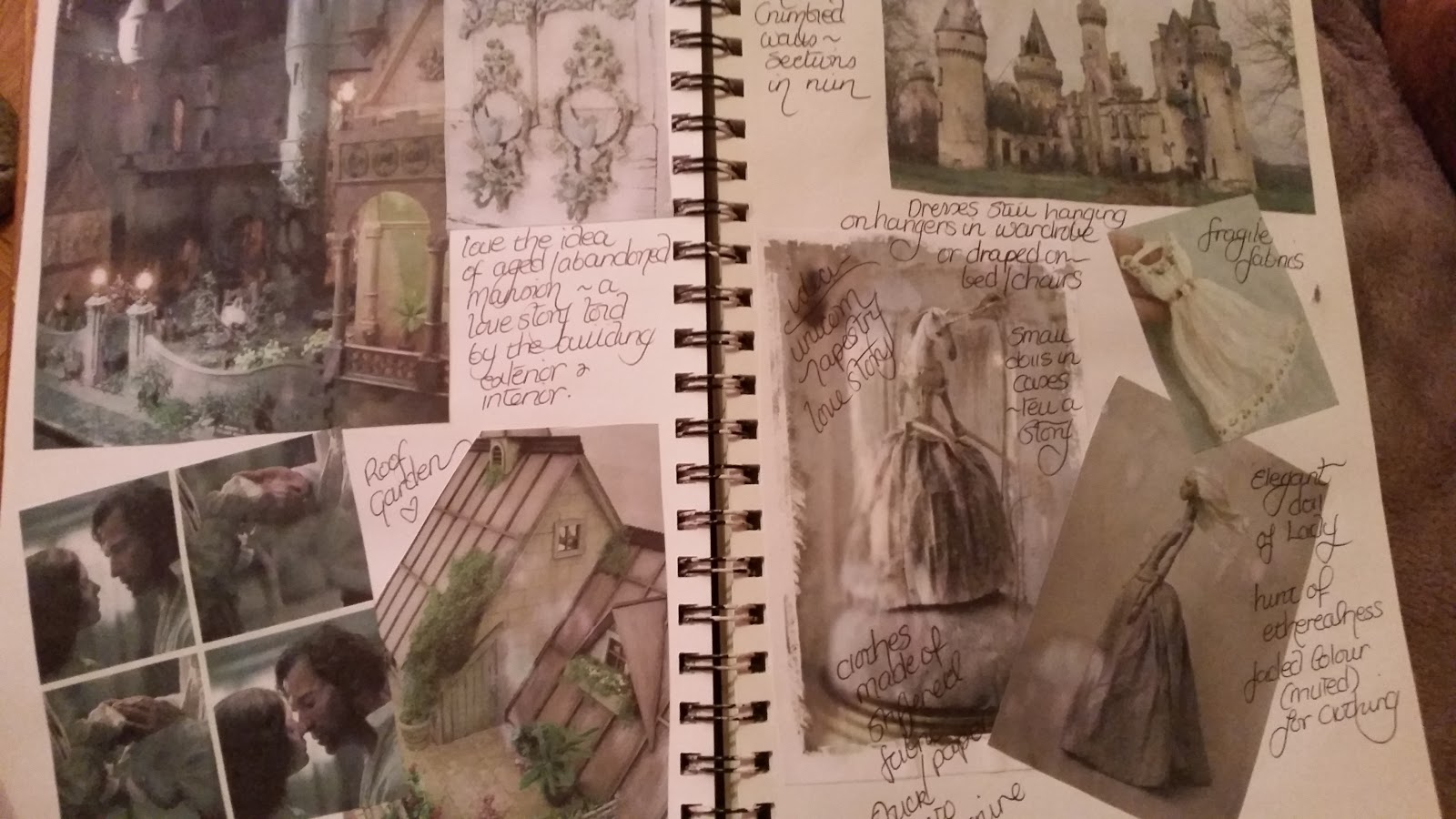
The story presented itself when I was creating a visual reference journal for a dolls house. The magic happens like that. Visuals and songs play through my mind and the new characters come alive. This story is quite different to 'A Carpet of Purple Flowers' but spiritual connections are still there. ;o) 
A romance that travels through time ~ the painting of characters
Music to tease the senses
Love and light,
Trace
xoxo

Monday, 31 October 2016

A Wandering Soul


Crossing the veil between worlds...

A light bright
a loud cry in the night
makes way for a soul in the dark
gliding through time
a passage ethereal sublime
a story forgotten renewed

Mingling the past into the future
a haze blinding most
glamour hides a host
the spiritual warrior has eyes to see
but not until he falls to his knees

The figure in shadow feels the heart of the broken
crushing love not forgotten
gripping mist 
chasing dreams
karma eludes or so it seems

Circles and cycles
souls entwined
something at work
possibly divine

Love and light,
Trace
xoxo


Sunday, 18 September 2016

Book Stuff. How important is a book blurb?

Often it is the editor or some other person from the publishing house who writes the book blurb/jacket description. The publisher usually has a better idea of what elements of the story will most appeal to readers who pick up the book at a glance.
Below is an example of how important it is to get the blurb right. A professional reviewer and author, Christina Philippou, gave ACoPF a wonderful 5-star rating and listed it in among the top 10 books of 2015 on her blog - Wow! But this shows how the blurb can give a wrong impression that could ultimately repel potential readers ~

'From the blurb, I expected a kind of ‘Twilight for adults’. What I got was intricately-imagined fantasy, suspenseful action, two beautifully interwoven love stories (not the kind of paranormal love triangle I was anticipating), and a lot of well-crafted drama. Brilliant – I want more!'

Read HERE

In hindsight, I should've definitely re-written the book's blurb - shown below:

‘Every Unknown is a Beginning’

Bea lives a simple life residing in a South London second-hand bookshop. It had been an especially difficult year, first with Bea’s uncle dying, then splitting up with Brandon, her philandering, druggie boyfriend. The shop's trivial daily conversations, local faces and calm were all she desired, but that was all about to change.

No-one expects to bump into supernatural beings, let alone two opposing sects of a forgotten race. Bea’s quiet existence turns into turmoil as she slowly starts to unravel a secret past. A lost history in which love, revenge, betrayal, magic, power and karma are not mere cycles of a soul, but a sacred journey upon a web of many possibilities.

The future is not set in stone and the choices that Bea makes ripple through the cosmos. As the secret unfolds she realises that no matter what form your soul takes there are consequences for one's actions in which time has no relevance – we call it karma, they call it Vororbla.

Will she cope with the heartbreak and truths before her?
What would you do if your very existence came into question?
Join Bea as she uncovers the truth of her past via A Carpet of Purple Flowers.

To something like this, perhaps?

Discover a new fantasy world with a unique love story.

'Four Souls & Three Hearts' 

No-one expects to bump into supernatural beings, let alone two opposing sects of an otherworldly race. Bea’s quiet existence as a bookshop owner in SW London turns into turmoil as she starts to unravel a lost history. Reality quickly becomes blurred with folklore, and as the secrets unfold, she realises that no matter what form your soul takes, there are consequences for past actions in which time has no relevance – we call it karma, they call it Vororbla.

What would you do if your very existence came into question? 

Hmm. I'm going to work on book two's.

FICTION BLURB TIPS - T K. H

Note that the goal of the blurb is NOT to summarise the book. Rather, the goals are to:

  • Implicitly reveal the genre or subject. This should reinforce the message conveyed through the title and visually by the cover.
  • Entice the reader to look inside.

That’s it!

Here is a fiction blurb checklist:

  • Be concise. Did you say anything that was unnecessary?
  • Arouse curiosity. Did you give anything away? Does it read like a summary?
  • Genre. If strangers can’t read the blurb and guess the precise sub-genre or have some idea as to the content, your blurb has miserably and utterly failed to be an effective sales tool.
  • Engage. You need to draw interest immediately; most customers won’t be patient and let you build things up (true of your Look Inside, too). Come out swinging with your best stuff, but also pack enough punches so that you can engage interest throughout. When you run out of punches, stop writing your blurb.
  • Flow. Check that it flows well. A hiccup, such as when a reader has to stop and figure out how to correctly parse a long idea, is like stumbling on your way to the cash register.
  • Spellcheck, aisle three. If you can’t get the spelling and grammar right in a hundred words or so… Look, it’s not an option. You have to get it right.
  • Vocabulary. It needs to match your target audience. Words they don’t understand can scare them away (but if such words are common in the prose, you also don’t want to create false expectations).
  • Research. Do your homework. Check out blurbs of successful books similar to yours.

Feedback. Ask for opinions on your blurb. Before you publish, this can help you generate buzz.

Did you know Amazon has 30,000,000 different books to choose from? Wow! 

Love and light,
Trace
xoxo

Tuesday, 14 June 2016

Fantastic News...

WOOHOO! 
'A Carpet of Purple Flowers - Book One' reached the 
Top 100 Amazon Bestseller Paid Kindle Ranking in 3 Sub-Genres.
Thank you so much. Chuffed to bits.
#12 in Books - Fiction - Religious and Inspirational - Romance
#48 in Kindle Store - Books - Science Fiction and Fantasy - Fantasy - Fairy Tales
#51 in Kindle Store - Books - Literature and Fiction - Mythology and Folk Tales

Amazon Bestsellers Rank: #14,247 Paid in Kindle Store U.K

Love and light,
Trace
xoxo

Friday, 29 April 2016

Ian Irvine on writing

Had to share a wonderful couple of websites on writing with you all.
 
“A writer’s job is to give his readers pleasure …
through stress, strain and tension.” ~ Sol Stein
The essentials of successful storytelling – for popular fiction, are external conflict, inner conflict, compelling characters and sustained suspense. 

According to Maass, every hero should have “a torturous need, a consuming fear, an aching regret, a visible dream, a passionate longing, an inescapable ambition, an exquisite lust, an inner lack, a fatal weakness, an unavoidable obligation, an irresistible plan, a noble ideal, an undying hope, or whatever it is that drives him beyond the boundaries that confine us, and brings about fulfilling change.”

Relating to the characters is what makes a story real, but how does this work? Relating means making an emotional connection, and the emotions we’re feeling when we read a story are the emotions of the characters (enhanced by our own lives and experiences). What they feel, we feel. The better the story, the more we lose ourselves in the lives of the characters and the more we become them, through identification.
The Basics of Story Craft
In its purest form, a story consists of just three elements: conflict, action, and resolution (Cleaver). Someone is faced with a problem (conflict) that he must struggle to overcome (action), and he either wins or loses (resolution).

Conflict brings stories to life, though it isn’t important for what it is, but for what it does. What does it do? The answer to this question lies at the very heart of storytelling. Conflict forces characters to act in ways that reveal who they are – and nothing tells us more about characters than how they deal with their troubles.

When conflict exposes who a character really is, the reader is drawn in through identification. The more difficult the character’s choice, the more his true nature will be revealed. In great stories – Romeo and Juliet; Hamlet; Scarlett O’Hara; Frodo; Harry Potter – the heroes are forced to go all the way. The more pressure you put on your character, the more you make him reveal his true, inner self and the more powerfully your readers will identify with him.

To be forced to change, to act and reveal their innermost selves, characters need to be frustrated, desperate and at the end of their rope. The worse you make it for your characters the better it is for the reader. When the characters give all they’ve got, readers experience it deeply and powerfully.
Conflict is often misunderstood in fiction. A great story can’t be made from everyday conflict (bickering, abuse, arguments, fights etc). A great story requires dramatic conflict, that is, conflict related to the hero’s story goal – either furthering it or blocking it. A dramatic want and a dramatic obstacle are needed to create dramatic conflict.
A dramatic want arises when the character is desperate to make things change. She can’t stand this aspect of her life any longer, and has to act. If she can live with things the way they are, if she can turn away from what she wants and be no worse off, it’s a false want and will only create a false conflict.
A dramatic obstacle is one that is as determined to block or deny the want as the want is driven to deny the obstacle (Frodo is determined to take the ring to Mount Doom, Sauron is determined to stop him). If the character can ignore the obstacle and suffer no harm, it’s a false obstacle and there is no conflict, no drama, and no story.
General Ways to Create Conflict (adapted and expanded from Lukeman, The Plot Thickens).
Create inherently conflicting characters. Your characters should be sufficiently different so that, even if they’re friends or lovers, they will constantly strike sparks off each other (for instance, a deeply religious person and a gleefully atheistic sinner, a communist and a capitalist, a refined lady, and a boorish slob). When you put such characters together it creates reader anticipation about the coming conflict and its consequences. But make sure the conflict is dramatic conflict.
You can create conflicting characters in an infinite number of ways, via:
  1. Opposing character traits – eg, aggressive, argumentative, a meditator, a conflict avoider;
  2. Race or nationality (for instance, characters from countries or regions which traditionally hate one another);
  3. Political or religious or moral or ethical views;
  4. Money, social status, upbringing, education, etc
Work out the conflict potential for each of your characters (you could rate it on a scale 1-10), then tailor it to create the maximum potential for conflict with the other key characters.

Where two characters have a generally harmonious relationship, find ways to wedge them apart – for instance by giving them different goals, agendas or attitudes. You can heighten conflict in any scene by giving the people in the scene opposing goals. Raise the stakes, make the need for the goal more desperate, and the scene will come alive.
Find more HERE
A character is in inner conflict (i.e. torn in two directions at once) when he has two goals, needs, wants or desires that are mutually exclusive. He must choose between equally desirable (or undesirable) courses of action, each supported by its own inner voice (Frey, How to Write Damn Good Fiction, and Iglesias, Writing for Emotional Impact). If he chooses one, he can’t have the other (Maass, Writing the Breakout Novel Workbook). The conflicting forces don’t have to be world-shattering in themselves, but they do have to really matter to your hero.
Bring your readers to a state of total absorption by showing the storm raging inside the hero: the doubts, misgivings, second thoughts, apprehension, fear, guilt pangs, remorse, indecision, etc. Powerful conflict comes when the opposing emotions or courses of action are equally strong.

The reader now suffers the hero’s inner storm and takes sides in the painful decisions he is forced to make. It is this participation in the decision-making process, when the reader identifies with the hero’s conflicts and wants him to make one decision over another, that transports the reader – and makes the story memorable. The inner conflict creates powerful suspense because the stakes are high yet readers don’t know:
  1. What the hero will do in the crisis;
  2. Whether it will be a good choice or a disastrous one;
  3. Either way, what the consequences will be, for him and for others.
To make the story even stronger and more compelling, give your hero multiple inner conflicts, then weave them together with the inner and external conflicts of the other key characters.
Common Behaviours Exhibited by People Suffering Inner Conflict

People suffering strong inner conflicts may (calmdownmind.com):
  1. Feel physical discomfort, stress or agitation, but suppress or deny it;
  2. Do what they ought to do rather than what they really want or need;
  3. Struggle to make decisions, and doubt the decisions they have made;
  4. Be uncertain about what they want from life;
  5. Be easily influenced by others;
  6. Feel guilt or shame about past behaviour or natural drives or urges;
  7. Attract or be attracted to dysfunctional relationships that are rife with conflict;
  8. Be unstable or volatile, especially facing some challenge;
  9. Constantly seek support from others due to a lack of self-conviction;
  10. Suffer sudden mood or personality changes;
  11. Seek distraction via entertainment, alcohol, drugs, sex or gambling, etc.
More HERE
How to Write Love Scenes by Carolyn Campbell
A love scene can provide a satisfying ending or an enduring, effective hook that you can thread throughout the plot of a mainstream novel. Such a scene can serve as an action scene, a sequel following a scene, or it can build tension and suspense leading up to another scene. The relationship between the two characters in a love scene can add interest to the story, move the plot forward, or complicate and add tension to the story.
1. Create tension by rendering the lovers as opposing forces
2. Get involved in your love scenes
3. Keep the lovers in character
4. Raise sexual tension through conflict
5. Reveal sexual attraction through contrast
5. Build suspense, anticipation, and intensity
6. Heighten the characters' five senses
7. Reveal relationship status and character changes
8. Tantalize with temporary togetherness
9. Turn up the heat (and the speed) with touch
10. Make love a difficult choice to heighten the emotions
11. Captivate with close calls
12. Kiss your story good-bye
Another great section HERE
Polishing Your Prose: Tips on Grammar, Article & Story Structure, and Self-Editing
Writing Speculative Fiction: Fantasy, Science Fiction & Horror HERE
Fiction Writing Tips: Characters, Viewpoint, & Names HERE
Romanticism (also the Romantic era or the Romantic period) 
was an artistic, literary, and intellectual movement.
William Blake (28 November 1757 – 12 August 1827) was an English poet, painter, and printmaker. Largely unrecognised during his lifetime, Blake is now considered a seminal figure in the history of the poetry and visual arts of the Romantic Age. His prophetic poetry has been said to form "what is in proportion to its merits the least read body of poetry in the English language". His visual artistry led one contemporary art critic to proclaim him "far and away the greatest artist Britain has ever produced."

 
William Sharp (12 September 1855 – 12 December 1905) was a Scottish writer, of poetry and literary biography in particular, who from 1893 wrote also as Fiona Macleod, a pseudonym kept almost secret during his lifetime. He was also an editor of the poetry of Ossian, Walter Scott, Matthew Arnold, Algernon Charles Swinburne and Eugene Lee-Hamilton.
Foam of the Past is the ‘selected writings’ of Sharp’s channelled pseudonym, who became a darling of Victorian readers and one earnestly courted by the fin-de-siècle ‘Celtic Twilight’ movement. This collection, includes provocative dark tales, early church musings, mystical ecritures, reveries of nature, political polemics, and various delightful vignettes. A gleaming new jewel for Scottish literature and Gaelic culture.

love and light,
Trace
xoxo

Thursday, 31 March 2016

Fancy popping over to the book website?

A Carpet of Purple Flowers
Booklist Online / Netgalley Reviews: 

  • Fantasy fans will wait eagerly for the next installment in McCartney’s series, enchanted by the complicated love story and the surprising cliffhanger ending. — Amy Dittmeier, Booklist Intern
  • This was a fabulous book, with excellent writing and a fascinating story. I would absolutely love to read anything else this author has to offer! ~ Jessie T, Reviewer


  • This is a creative romance/paranormal/fantasy that takes place in London at a bookstore. I enjoyed the characters and the interaction between the different races .  Bea is a bookseller who can see both the sects of an ancient race.  They are usually invisible to humans and the fact that she can see both has them all confounded and vying for her attention.  She falls in love with both leaders and is about to prompt a war between the two factions.  She must explore her past to discover the secrets that might change the future. ~ Ann K, Bookseller
Art ~ Polyvore Creation

Wednesday, 3 February 2016

Guest Post Shirley Golden ~ Writing

Hi, everyone :o) 
Shirley Golden, also an Urbane author, has kindly invited me to answer a few questions concerning 'A Carpet of Purple Flowers', my debut novel. The guest post is now up on her blog, and I thought that you might like to pop on over. :o)


Link to Guest Post:


A Carpet of Purple Flowers can be purchased directly from Urbane Publications HERE

Portal?

love and light
Trace
xoxo