Showing posts with label #amwriting. Show all posts

Tuesday, 28 April 2020

Imagination

Hi, Everyone.
Famous Scientists Who Tapped Into Magic & Imagination to Change ...
I thought I'd make a post concerning symbolic visual knowledge and imagination. I'm a pretty curious person with bundles of imagination, and so research a lot about many varied things. One of my favourite topics is origins and cosmology. When writing 'A Carpet of Purple Flowers', I wanted to create a cosmology for my beings called The Sindria and understand their environment. The mind is amazing when it's set free to wander the realm of possibility and along the way connections of patterns are made. This is where the creative mind/consciousness plays with what if's with no boundaries. If there's a problem that needs solving, imagination can take you there. Then, all you need do is research the science behind what you imagined or try and piece together scientific evidence/hypothesis that will back-up your theory to make it viable.
It's why I love Einstein's quote: "Imagination is more important than knowledge. For knowledge is limited, whereas imagination embraces the entire world, stimulating progress, giving birth to evolution."
Building a Matrix with reinforcement learning and artificial ...
“Logic will get you from A to Z; imagination will get you everywhere.”
― Albert Einstein

Some more on imagination:

“Everything you can imagine is real.”
― Pablo Picasso

“The moment you doubt whether you can fly, you cease forever to be able to do it.”
― J. M. Barrie, Peter Pan

“My imagination functions much better when I don't have to speak to people.”
― Patricia Highsmith

“Imagination does not become great until human beings, given the courage and the strength, use it to create.”
― Maria Montessori

“Our imagination flies -- we are its shadow on the earth.”
― Vladimir Nabokov

“Vision is the art of seeing things invisible.”
― Jonathan Swift

“Imagination is the only weapon in the war against reality.”
― Lewis Carroll

“Children see magic because they look for it.”
― Christopher Moore, Lamb: The Gospel According to Biff, Christ's Childhood Pal

“Reality can be beaten with enough imagination.”
― Mark Twain

Okay, enough with the quotes, but you see how imagination is everything.

Jonathan Wolstenholme. a book character, journals his experiences, and growing knowledge of the Sidhe, supernaturals. Through researching ancient symbolic visuals, he discovers that the ouroboros, a symbol in the form of a snake biting its own tail, used especially in ancient Egypt and in Hermetic philosophy, as an emblem of eternity meant the cycle of birth and death. That one end represented the beginning and the other, the end. 

He pondered on this a while, what would be interpreted as such in our known universe? He pictured a snake across the heavens as the Aborigines Rainbow Serpent and Dreamtime. The Dreamtime is the period in which life was created according to Aboriginal culture. Dreaming is the word used to explain how life came to be; it is the stories and beliefs behind creation. 

The Rainbow Serpent or Rainbow Snake, a creator god. What would it look like? Jonathan envisaged a massive black hole as the point of rebirth, as exploded from the belly of the snake (center of a black hole) and the pinprick black holes or possibly white holes, being the ones that haven't exploded yet. All would contain within their belly the primordial soup which makes a world. This would also match the theory of the big bang and many spiritual teachings of returning to the source, and the cycles of karma, which the Sidhe called Vo-ror-bla. He speculated that consciousness/soul were the same things, alive but untangible. What if, pieces of matter and light were sucked in from the holes and expelled at the end, creating other universes, even replicas of us as all? Parallel universes perhaps, due to the invisible information/building blocks of life being the same stuff as ours, passed through. Would these building blocks replicate our own? Was that one form of quantum entanglement connecting us all? 

Jonathan mentally noted the snake in mythology and symbols such as Yin/Yang, the infinity symbol and many more, all contained creation stories, balance of the universal power, and cycles of life and death. So, the ancients were indeed using imagery to depict the story of creation but along the way, text and literal interpretation got in the way. The spiritual interpretations of the visuals not understood by mainstream academia logic, and maybe, were classified wrongly as myth and folklore. The truth of many things concerning our histories became lost because of a logical perspective and disconnecting from ourselves spiritually, leaving that task to religion, external influence. 

Everything needs balance he concluded, including the decoding of our origins, Mind (logic), Heart (feels/spirit/essence), and Soul (spiritual consciousness). The trio that religion oft depicts, that our law courts state a thing three times, even commands are given three times in order to verify that the message is being given intentionally. Writers and artists use the rule of three. The Latin phrase "omne trium perfectum" (everything that comes in threes is perfect, or, every set of three is complete) conveys the same idea as the rule of three. Three/Thrice/Trio/Triad...the lure of three...his mind drifted to numerology and jumped to Tesla's Key to the universe...vibration, energy frequency. 3...6...9  The Universe...

The above isn't in the books, it's research and philosophical ramblings. I create Jonathan's journals to better understand the character/the realms/origins through concepts/theories that come to me. Without imagination, all stories would be the same. It is the perspective of the writer which creates a new idea for a story told millions of times already but from different eyes. This, to me, is imagination connecting the dots/patterns to a very ancient puzzle where pieces were destroyed/lost /misinterpreted during the linear time. Imagination fills these lost spaces in the puzzle, and from different writers, we see the many aspects of the same/origin puzzle piece.
Imagination is Actually Magic. Seriously. – Action Plan Marketing
 “There is no such thing as a new idea. It is impossible. We simply take a lot of old ideas and put them into a sort of mental kaleidoscope. We give them a turn and they make new and curious combinations. We keep on turning and making new combinations indefinitely, but they are the same old pieces of colored glass that have been in use through all the ages.”

― Mark Twain, Mark Twain's Own Autobiography: The Chapters from the North American Review

5 Reasons Imagination Is More Important Than Knowledge
Love and light,
Trace
xoxo
Monday, 11 March 2019

Free on Amazon Kindle - A Second Edition with New Cover - Ends Today.

A Carpet of Purple Flowers: Book One on Kindle 
(Second Edition - includes an extra chapter)


Two Worlds - Three Hearts - Four Souls.

Editorial Reviews -

A truly unique premise that merges the spiritual with the paranormal in a very interesting way. I highly recommend. 
— Cate Hogan, Developmental Editor, Washington Post & USA Today

Fantasy fans will wait eagerly for the next instalment in McCartney’s series, enchanted by the complicated love story and the surprising ending. 
— Amy Dittmeier, Booklist, American Library Association

This is the first paranormal romance I have ever read and found it an enjoyable introduction to the genre. It has an original premise and a collection of strong characters. The ending is packed with drama and the ultimate resolution is a surprise. The plot and subplots are strong. 
~ Honey Badger's Bookclub

love and light,
Trace
xoxo


Tuesday, 7 February 2017

The Paper Unicorn ~ New Novel Inspiration

Elian and Felicity
 Elian Trevelyan ~ Felicity Campbell
💕
Work in progress
The Paper Unicorn ~ Fantasy Novel
Inspiration Journal
Quick scribbles of creative flow
Arty pages
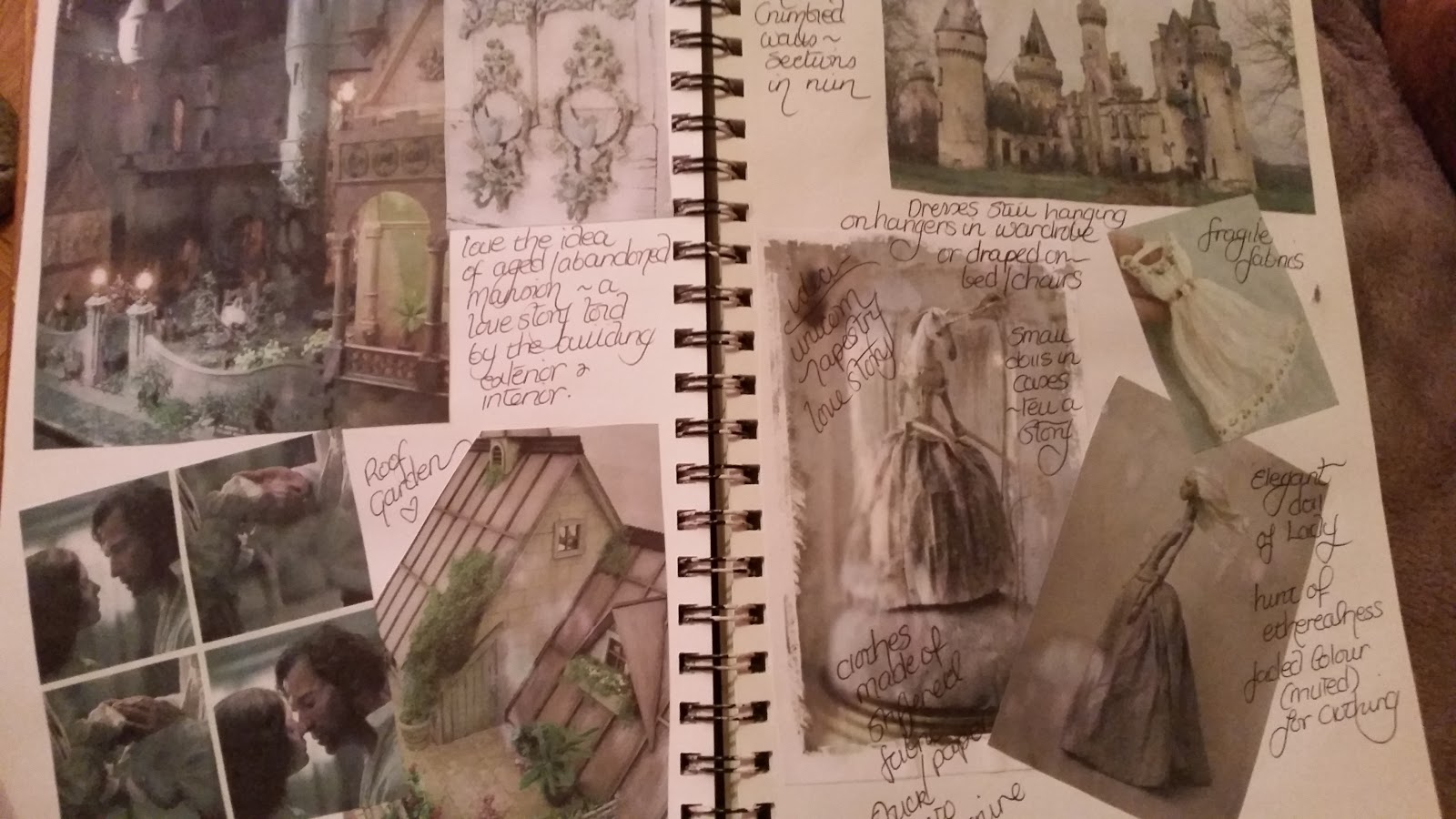
Two characters come to life when Clara, a young woman from London, inherits an old manor house left to her by a stranger.

On moving in, her own life becomes entwined with that of a beautiful love story previously lost within the manor's stone walls.

Clara questions the intentions of the mysterious benefactor. Did the person know of the lovers? But more importantly, why was everything left to her? What is the connection between them?

The story presented itself when I was creating a visual reference journal for a dolls house. The magic happens like that. Visuals and songs play through my mind and the new characters come alive. This story is quite different to 'A Carpet of Purple Flowers' but spiritual connections are still there. ;o) 
A romance that travels through time ~ the painting of characters
Music to tease the senses
Love and light,
Trace
xoxo

Sunday, 18 December 2016

Christmas Writing

Claíomh Solais  (Shining Sword) first draft in Progress
Book Three ~ The Future
More HERE
 
Book Three ~ The Past
More HERE


Love and light
Trace
xoxo

Monday, 31 October 2016

A Wandering Soul


Crossing the veil between worlds...

A light bright
a loud cry in the night
makes way for a soul in the dark
gliding through time
a passage ethereal sublime
a story forgotten renewed

Mingling the past into the future
a haze blinding most
glamour hides a host
the spiritual warrior has eyes to see
but not until he falls to his knees

The figure in shadow feels the heart of the broken
crushing love not forgotten
gripping mist 
chasing dreams
karma eludes or so it seems

Circles and cycles
souls entwined
something at work
possibly divine

Love and light,
Trace
xoxo


Friday, 30 September 2016

Damn, I love this song. :o)


Like I'm Gonna Lose You - Jasmine Thompson Lyrics 
(Meghan Trainor &John Legend Cover)

#amwriting

Monday, 11 July 2016

Have you tried to work on multiple book projects at the same time?


Hi, everyone. :o) 
Lately, I've been busy editing book two. My kitchen table is covered with many handwritten notes that need slipping into place in the manuscript, to ready for typing up. This task has been made more difficult as the pile of scribbled notes dropped and got mixed up. They usually live in Ikea box files but I left them in a pile overnight on the living room table, yup, big mistake. But, all is well as I mentally prepare myself for the paper battle. :o) 
While writing book two, another story flowed from the muse. I tried to ignore the visuals that played over in my mind, but they refused to remain silent. So there it is, I got side-tracked for a while on outlining 'Shining Sword', a story that will compliment the series and follow the future path of book two, so it is in fact, very relevant. I'm itching to start the manuscript but must stay focused on editing 'Awake in Purple Dreams'. It has been tough ignoring the temptation to start writing, though. Has anyone else had this experience?
I decided to google the question of writing two books at once. Below are what other authors have experienced. 
“I’m currently working on two novels – one is the sequel to a finished book that is currently looking for a publisher. The other is a project that is very much in my mind at the moment and won’t wait its turn! The first is about 42k words done and the second is only a couple of thousand words written, but I’ve been making extensive notes and plans. As the 42k project is the sequel to something currently before publishers, I’m making that my priority, and trying not to be too distracted by the other one. But when ideas won’t leave you alone, you have to at least make notes and rough outlines of scenes. So I would say that I’m working properly on one novel while working part-time on the other!” Alan Baxter, dark fantasy author.

Write them all. I have two I’m working on now. I’ve had as many as 4 at a time in my head. You have to let the ideas out.@lynnleite

Make an idea book where you can take a little time to put down info about the ideas you aren’t ready to work on. @druchunas

Plot them all, write chapter-by-chapter summaries and then go back to writing just one. That or work 24/7 til they’re done. @graywave

Keep feeding all 3 until 1 takes the lead (attention, energy). Then focus on that one, get to others afterwards. Good luck!@MsMartha_writer

What I always do in that situation is write down key events, maybe write a full scene, so you can go back to it later. @NatashaMcNeely
Source: HERE

The strategy of writing one book in the morning and revising another book in the evening is intriguing.

It usually takes me four months to write a first draft. For the last couple of months I grow wearing of writing and pine to revise. Then it takes me about a year to revise. After a couple of months, I yearn to write a new story. I wonder if working on two books at once would be more satisfying. It will then take me eight months to write a rough and two more years to edit. Yeah, I'll have two books done instead of just one, but the long time spans are intimidating.

I have several books currently in progress. In fact, I've found I'm usually working on multiple books at the same time. I usually don't work on more than one in a day, though. I'll work one for a while, drop it if I have to work some issues out and pick up one of the others.
Sometimes it works wonderfully and sometimes I have to completely re-read things and get back into the saddle of one of the ones I've set aside for a while.

I used to be a one-book-at-a-time writer, but gradually I'm shifting into having multiple projects going at the same time. This can be beneficial for a variety of reasons. One is simply that you'll have a variety of things to work on and hopefully won't get bored as easily. Another reason is, inevitably, you'll have projects at different stages of completion. Say you get a book published; if you only do one at a time, well, your readers then might have to wait a looong time to see another one from you. But if you've already been working that project, maybe the rough draft is done and you're already well into the revisions. They won't have to wait as long for it to be published.

One book about writing novels I read suggested that you should have at least three projects going at any one time. Ideally, once you've been working for awhile, one should be querying for an agent or with an agent; another in the revision stages; and a third in the rough draft/first draft stages.

One of the positive things about having several unfinished works in progress at the same time is if you get bored or blocked with one, you can work on another. You don't have to risk poorer writing if you're just not into something, or risk dropping it and not writing for a while.

I've got two novels that I'm writing at the moment, another that's requiring significantly more planning and research that I'll hopefully start once these two have first drafts finished. The two I have going at the moment have such different voices and genres that the chances of me not wanting to work on at least one of them is slim to none.

This is a really good point. I usually work on one project at a time but like others have said, I'm in the mood to write when I'm revising and to revise when I'm writing. I might start thinking more about the future and try to find a way to juggle that second project.

I find that the very act of writing lets me come up with more things to write about. I'll be working on one story, I'll hit a dead end and the process of deciding where I want to go next creates alternative ideas. These ideas often broil together into entirely new plot ideas or story premises.
Just from the act of writing my last two novels, I have about five new stories in several different genres, including ghosts, pirates, sci-fi, fantasy, romance and general fiction.
Source: HERE
Uncle Barry’s Formula for Writing Multiple Books at Once 

  • Your projects must all be vastly different from each other: If you’re working on more than one book at a time, it’s deadly to have them be similar. Look at it this way — say you’re writing a dystopian novel. And at the same time, you’re working on another dystopian novel…but it’s just a different kind of dystopia. Well, I think you see the problem. When you get burned out on one, the other one is no safe haven. They’re different books, but they’re too similar. They use the same psychic muscles. Make your projects distinct from one another and each one will act as a sort of safety valve for the others. Bored with that thriller you’re working on? Skip over to the romantic comedy for a little while!
  • Always be at a different stage on each project: Again, this is about overworking muscles. Starting a book uses a different set of mental abilities than editing one or cruising to the end of one or researching one. So stagger your projects. At the beginning of 2010, I was revising my graphic novel script. At the same time, though, I was deep into the first draft of The Book That Will Kill Me. And I was researching I Hunt Killers. Later in the year, I was halfway through the first draft of Killers when I started writing the second Archvillain. Simultaneously, I was overseeing Colleen’s art on the graphic novel and headed toward the end of a draft of The Book That Will Kill Me. Once again, each book acted as a pressure release for all the others. No matter what I was working on, it was different and varied from what I had just been working on earlier that day or week.
  • Turn everything in early: This is a tough one for many authors, who have difficulty meeting their deadlines already. But I swear to you, it matters. When you have so many projects on your plate, it’s inevitable that two or more deadlines are going to overlap or conflict. This means that if you slip on one deadline, you’ll put multiple projects in jeopardy. And if you think being in the weeds on one book is bad, try it on many! In order to keep yourself honest and to prevent a total meltdown, turn in everything early. Set your own deadlines that are well in advance of the official ones and follow your deadlines, no one else’s.
  • Let no one else dictate your schedule: Closely linked to #4, obviously. But it’s important enough to call out on its own. In addition to not letting anyone else dictate a deadline to you, you also can’t allow anyone else’s whims to stall you in developing a project. Here’s an example: Say you have just turned a new book to your editor. You have another project you’d like to get started on, but your editor has told you that she will get back to you on the first book in a couple of weeks. You think to yourself, “Well, I won’t make much progress on the new project in just a couple of weeks, so I’ll wait to hear from my editor and THEN I’ll start on the new one.” No! Odds are, it will take longer than a couple of weeks for your editor to get back to you. And even if it IS just a couple of weeks, that’s still time you’re wasting, time when you could make at least some progress on the new project. So plunge into the new project and let your editor get back to you whenever she can.
  • Be flexible: When I work on multiple projects, I tell myself, “OK, by this point in time, I need to have made X amount of progress on these three projects.” And so on. I manage to stick to that pretty well. But writing a bunch of books at once isn’t the easiest thing in the world, so you need to be flexible. Allow yourself to spend an extra few days on something if you’re really feeling it. Give yourself a week off to play Xbox if you’re starting to feel dangerously loopy. If you work on comedy in the morning and drama in the afternoon, switch it up every now and then in order to give yourself a break. Flexibility will keep you from cracking up entirely.

Source: HERE
Love and light,
Trace
xoxo

Thursday, 31 March 2016

Fancy popping over to the book website?

A Carpet of Purple Flowers
Booklist Online / Netgalley Reviews: 

  • Fantasy fans will wait eagerly for the next installment in McCartney’s series, enchanted by the complicated love story and the surprising cliffhanger ending. — Amy Dittmeier, Booklist Intern
  • This was a fabulous book, with excellent writing and a fascinating story. I would absolutely love to read anything else this author has to offer! ~ Jessie T, Reviewer


  • This is a creative romance/paranormal/fantasy that takes place in London at a bookstore. I enjoyed the characters and the interaction between the different races .  Bea is a bookseller who can see both the sects of an ancient race.  They are usually invisible to humans and the fact that she can see both has them all confounded and vying for her attention.  She falls in love with both leaders and is about to prompt a war between the two factions.  She must explore her past to discover the secrets that might change the future. ~ Ann K, Bookseller
Art ~ Polyvore Creation

Third Person Omniscient ~ Writing

Do people analyze the POV of books prior/while reading? 


One of the first most confusing debates I came across while writing concerned POV. I'll be honest, when I sat down to write 'A Carpet of Purple Flowers', I didn't stop to question what viewpoint I wanted to use. I just wrote the story. On editing the first draft, admittedly, a few areas needed correcting for 'head-hopping', mainly the fight scenes. Initially, it was an extremely wonderful beta-reader that mentioned the Omniscient point of view in her feedback, and I rushed to research what she meant in her comment, below:

I was very, very amazed at how the author used the third person omniscient viewpoint so naturally. I can honestly say I’ve never read a book where this technique was very effective. Usually, I like to stay in one viewpoint, as a reader. But with this novel, I think it gave credit to the grand scope of the story. Bea might be the main character, but the story is about so much more than just her. It’s about Vororbla, something that intertwines all souls together in a way – so I considered it very symbolic to use the omniscient viewpoint. ~ Dominique Diane Scott 

Isn't it strange how the inner voice knows how to tell the story? I'm glad that I didn't overthink the whole POV prior to writing, I think my head would still be spinning with all the technicalities even now!

After reading and joining in conversations about POVs with other writers, it became apparent that readers may feel more distant from the characters. So, paranoid, obviously, I went back in and edited some more in the hope that they would be reachable, connectable. I really hope that I've managed to do that. I'm still learning. :o)

I can't imagine telling this story, over three books, from just one viewpoint, or in third person limited, especially being such a big tale. If the characters have a role to play, then they must get heard. I want the reader to visit their thoughts, to truly feel the perspective of that person. Of course, minor characters are kept at bay...phew! We don't need overload.

I've provided more information below from some fab posts, links included.

Further reading via scribophile.com ~ Very informative post


Writing in Third Person Omniscient point of view lets you do many things with your story that you wouldn't normally be able to do were you to use a Limited or even a Multiple point of view.
Third Person Omniscient lets you move freely through time and space, gives more information in a smaller amount of time, and yes, even shows what multiple people are thinking within a scene.

There are a lot of advantages to Third Person Omniscient, but if you look at fiction novels written in the 20th century, most are written in Third Person Limited. Why is that?

Part of the reason is that Third Person Omniscient is considered one of the hardest POVs to master because there are a lot of places where you can go wrong.

First, many new writers confuse Omniscient with "Head-Hopping". This often happens because a writer wants to show what many or all of the characters within a scene are thinking, and then simply writes it down as if it were Third Person Multiple instead of Omniscient POV. Which will come out as a jumbled and confusing pile of perspectives mixed together.

Second, many don't quite grasp the differences between an Objective perspective and a Subjective perspective, and how to use them to their advantage.

Third, Third Person Limited (or Multiple) can be indistinguishable at times from Third Person Omniscient, which can make things very confusing.

Then come the big drawbacks of using Third Person Omniscient: The distance between the characters and the reader that's inherent in the use of an Omniscient narrator. This is something that many writers struggle to overcome.

Head-hopping is a mistake that writers usually fall in to because they want to be able to show what each character within a scene is thinking. The Omniscient narrator can indeed do that. However, this should be done with the narrator's words, not the character's.

When writing Omniscient, a writer must be very careful not to give characters information that the narrator knows but that the character couldn't know. That's incredibly jarring to the reader and could defeat their faith in the Omniscient narrator.
In order to write a scene where we know the thoughts and actions of most—if not all—of the characters, it generally requires the Omniscient narrator have a strong voice so the narrative doesn't descend into head-hopping.

Is Third Person Omniscient Best for your Story?

So now that we've discussed the common pitfalls and how to deal with them, is Third Person Omniscient really the best POV for your story?
Take a look at your story. If it's character-driven, then Omniscient might not be the best bet. Since the story stands mostly on the shoulders of the characters and requires the reader to make a strong connection with them, Third Person Limited or First Person might be a better choice.
But if your story is plot-driven and wide in scope, then Omniscient might be an attractive option. That's because you need to get the points across quicker and can move across time and space in order to bring out just how wide the story's scope is.
Another thing to think about is your grasp on the Omniscient POV. If you aren't confident in your ability in using it, then you should get some practice first. It'd be best if you wrote a few short stories to gauge your ability.

Whatever POV you end up choosing, it must ultimately allow the reader to be able to sit down and engage with the story without getting confused or lost.

Why All the Fuss About the Omniscient POV? By K.M. Weiland

So what’s the problem with the omniscient POV? Why are so many authors confused about it? And why are so many editors delivering digital hand slaps because of it?

Omniscient POVs are tricky. I have to admit, I always wince (just a little) whenever authors tell me they’re writing in omniscient. I’ll admit this upfront: not a big fan of the technique–if only because there is so much more intimacy to be found in the tighter POVs of first-person and deep third-person. Furthermore, because omniscient is a POV that has largely fallen into disuse, it can be a harder sell to agents and editors.

However, that isn’t to say the omniscient POV can’t be wielded effectively. We definitely do still see a book here and there that uses it (usually in the literary genre). But the omniscient POV can be challenging to get right. Authors often struggle to maintain a consistent omniscient voice and figure out how the omniscient POV differs from random head-hopping (which dips in and out of multiple characters’ tight narratives without warning).

As you’re learning, this is largely because it’s a difficult concept to get our heads around in the first place!

Her Fearful Symmetry Audrey NiffeneggerThat isn’t to say editors won’t accept it (Audrey Niffenegger’s sophomore novel Her Fearful Symmetry was omniscient–and earned an advance of $5 million in a bidding war between publishing houses–largely, on the blockbuster success of her previous book, the first-person Time Traveler’s Wife).


What editors will always be looking for in an omniscient POV (or any POV, come to that) is an amazing narrative voice. That voice needs to be not just something that serves the story, but something that pops off the page and pulls readers in. That kind of voice can be more difficult to accomplish in an omniscient POV, if only because the narrator’s voice is much harder to define.


Read more HERE
Here and Here

What POV do/would you use? I would love to know your thoughts.

love and light
Trace
xoxo

Saturday, 23 January 2016

Storybook ~ Miss Brooke

Digital Storybook Inspiration

Miss Brooke


Hi, everyone. :o) 

I hope you've all had a fantastic start to 2016. 

Well, I've been keeping myself busy writing book two 'Awake in Purple Dreams'. Hence, my presence online being scarce. While writing, I discovered a character begging for her story to be told. She came from nowhere, I love it when that happens. ;o)
Her name is Brooke, and she's an art teacher with several big secrets. Her tale entwine's itself with a few characters from books one/two. This will be a continuation, complimenting 'Awake in Purple Dreams'. Perhaps a novella, but I feel Brooke's story is going to develop much further than a few pages. We'll see.

As always, I play around with the images in my mind and try to re-create some of that world, ready to share with you all. Enjoy!

Link to website page HERE
Alice in Street Art Land by Simon Crubellier, via Flickr

love and light
Trace
xoxo