Showing posts with label poem. Show all posts

Saturday, 17 March 2018

The Lay of Leithian...


The Lay of Leithian is an unfinished poem written by J. R. R. Tolkien. It tells the Tale of Beren and Lúthien, the story of the love of the mortal Man Beren and the immortal Elf maiden Lúthien. The poem consists of over 4200 verses. It was published after Tolkien's death in The Lays of Beleriand. Its precedents are found in the Welsh tale of Culhwch and Olwen in the manuscripts, the Red Book of Hergest and the earlier White Book of Rhydderch.
Beren ~ son of Emeldir and Barahir, a Man of the royal House of Bëor of Dorthonion. His romance with the first-born is one of the great stories of the Elder Days.
ladyoftheflower DeviantArt
Dorthonion ("Land of Pines"), poetically Orod-na-Thôn ("Mountain under Pine"), was a highland region of the First Age. Within the stories it later became known as Taur-nu-Fuin ("Forest under Night"), or Mirkwood.
Lúthien ~ an elf, daughter of Thingol and Melian. She appears in The Silmarillion, the epic poem The Lay of Leithian, the Grey Annals section of The War of the Jewels, and in other texts in Tolkien's legendarium. Her story is told to Frodo by Aragorn in The Lord of the Rings.
LicorneZsu - DeviantArt
Lúthien is a Telerin (Sindarin) princess, the only child of Elu Thingol, king of Doriath, and his queen, Melian the Maia. The legacy that Lúthien left behind can be most clearly seen throughout the later ages in those who stem from her ancestry, including the Royal Family of Númenor, being the line of Elros of which Arathorn and his son Aragorn were descended, and Elrond Half-elven who was Lúthien's great-grandson. She is described as the Morning Star of the Elves and as the most beautiful daughter of Ilùvatar.
Lúthien's descendant Arwen is called Evenstar, the Evening Star of the Elves, meaning that her beauty reflects that of Lúthien Tinúviel. Lúthien is also the first cousin once removed to Galadriel.
In the works of J. R. R. Tolkien, the Teleri, Those who come last in Quenya (singular Teler) were the third of the Elf clans who came to Aman. Those who came to Aman became known as the Falmari or "sea elves" and these are the Elves who are generally known as Teleri, though the term also includes their Middle-earth cousins the Sindar, Laiquendi, and Nandor of Middle-earth.
The third clan was the largest of the three houses of the Elves, and most of the Avari originally belonged to this clan.
Aman, also known as the Undying Lands or Blessed Realm, it is the home of the Valar, and three kindreds of Elves: the Vanyar, some of the Noldor, and some of the Teleri.
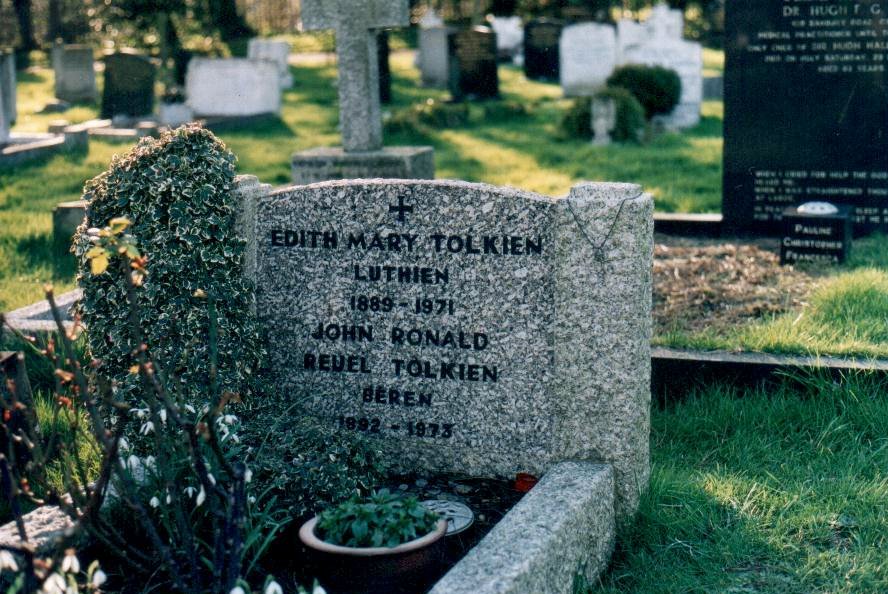
 Edith (Lúthien) and Tolkien (Beren)
The story was published as a standalone book edited by Christopher Tolkien under the title Beren and Lúthien on 1 June 2017. It is painstakingly restored from Tolkien’s manuscripts and presented for the first time as a continuous and standalone story. The intent of the book is to extract a 'single narrative' out of the ever-evolving materials that make up The Tale of Beren and Luthien. It does not contain every version or edit to the story, but those chosen by Christopher Tolkien which he believed would offer the most 'clarity' without the need to over-explain the complexities of the changes.
The BBC Radio adaptation of The Lord of the Rings includes a scene from The Fellowship of the Ring in which Aragorn summarizes the story of Beren and Lúthien for Frodo Baggins and his companions. Frodo later comes to realise the connection between their story and that of Aragorn and Arwen.
love and light,
Trace
xoxo

Thursday, 6 April 2017

Beautiful Nature

Beautiful photography by Rudi Moerkl.
My mind could live in this space forever ~ I want to jump in. ;o) 


Flowers adorn twisted trees

in salmon pinks, lilac, and muted leaves

like miniature sunsets 

opaque against a fading peridot sky

as above

so below

my soul found heaven upon a knowe

Love and light,
Trace
xoxo

Sunday, 4 September 2016

Rose-tinted glasses...

London Town

Streets noisy but silent
bobby doesn’t beat, officers sleep
plastic bag an urban tumbleweed
a flower grows through the cracked pavement

pretty walls adorned, a distraction
reflected in a drunks puddle
give me a fag, got a spare pound,
nothing humble about this town

sirens replace screams
window curtains twitch
but still…
the sun comes out
lawns are mowed
trees bear fruit
flowers are on the table

typing letters forming words
a mish-mash of thoughts on the screen
most will never be seen
a sigh
a sip of tea
a drag on a fag
it isn’t so bad
ponders life while staring up at the sky
a tear drops from the eye

by Tracey-anne

Love and light,
Trace
xoxo

Monday, 21 September 2015

THE STOLEN CHILD. W. B. YEATS


W. B. YEATS


Where dips the rocky highland
  Of Sleuth Wood in the lake,
There lies a leafy island
  Where flapping herons wake
The drowsy water-rats.
There we've hid our fairy vats
Full of berries,
And of reddest stolen cherries.
Come away, O, human child!
To the woods and waters wild
With a fairy hand in hand,
For the world's more full of weeping than
           you can understand.

Where the wave of moonlight glosses
  The dim grey sands with light,
Far off by farthest Rosses
  We foot it all the night,
Weaving olden dances,
Mingling hands, and mingling glances,
  Till the moon has taken flight; p. 60
To and fro we leap,
  And chase the frothy bubbles,
  While the world is full of troubles
And is anxious in its sleep.
Come away! O, human child!
To the woods and waters wild,
With a fairy hand in hand,
For the world's more full of weeping than
           you can understand.

Where the wandering water gushes
  From the hills above Glen-Car,
In pools among the rushes,
  That scarce could bathe a star,
We seek for slumbering trout,
  And whispering in their ears;
    We give them evil dreams,
Leaning softly out
  From ferns that drop their tears
    Of dew on the young streams.
Come! O, human child!
To the woods and waters wild,
With a fairy hand in hand,
For the world's more full of weeping then
           you can understand.

Away with us, he's going,
  The solemn-eyed;
He'll hear no more the lowing
  Of the calves on the warm hill-side.
Or the kettle on the hob
  Sing peace into his breast;
Or see the brown mice bob
  Round and round the oatmeal chest.
For he comes, the human child,
To the woods and waters wild,
With a fairy hand in hand,
For the world's more full of weeping than
           he can understand.


love and light
Trace
xoxo

Wednesday, 15 April 2015

Celtic Fairytale - Interesting reads

Books and Authors
Sharing some books that I wish to read. 
  • Gareth Knight


Springing from the heart of medieval France, The Romance of the Faery Melusine tells the story of Raymondin of Poitiers who accidentally kills his uncle while out hunting, and fleeing deep into the forest, encounters a faery by a fountain. Falling deeply into a mutual soul-love, the faery Melusine agrees to help Raymondin and to become his wife, on condition that he makes no attempt to see her between dusk and dawn each Saturday. On this basis the house of Lusignan thrives and prospers, until a series of treacherous events tempt Raymondin to violate his promise and shatter the magic which holds his faery wife to the human world. First rendered into written form in a text by Jean d'Arras in 1393, the legend of the Faery Melusine is well established in France, where she is credited with having founded the family, town and castle of Lusignan. However, it is very little known in the English-speaking world, despite the fact that Melusine originally hailed from Scotland. This new retelling by Gareth Knight translated from Andre Lebey's 1920s novel Le Roman de la Melusine captures the freshness of Lebey's telling of the legend and brings the benefit of Knight's expertise both in French literature and in the esoteric faery tradition.


The knights of King Arthur's Round Table - Erec, Lancelot, Yvain, Perceval and Gawain - first appeared in the works of Chretien de Troyes, who cast into Old French stories told by Welsh and Breton story tellers which had their origin in Celtic myth and legend. Chretien wrote at a time when faery lore was still taken seriously - some leading families even claimed descent from faery ancestors! So we do well to look again at these early stories, for they were written not so much in terms of mystical quests or examples of military chivalry but records of initiation into Otherworld dynamics. Gareth Knight, an acknowledged expert on spiritual and magical traditions and a student of medieval French, goes to the well spring of Arthurian tradition to unveil these original principles. What is more, he shows how they can be regenerated today. "Opening the faery gates" can have its reward not only in terms of personal satisfaction and spiritual growth but as part of a much needed realignment of our spiritual responsibilities as human beings on planet Earth.


The Breton lai is a narrative poem, usually accompanied by music, that appeared in France about the middle of the 12th century, carried by travelling musicians and storytellers called jongleurs. What is important about them is that they contain a great deal of faery and supernatural lore deriving from Celtic myth, legend and folktale. This collection of twelve tales focuses on faery lore in the lai tradition. Nine are taken from anonymous medieval jongleur sources; the other three are from the more courtly tales collected by Marie de France in the late 12th century. Gareth Knight, a scholar of medieval French as well as an established author on esoteric faery lore, provides a vivid and lively translation of each lai along with a commentary which takes a perspective both historic and esoteric.


The Mystery of the Seven Directions cuts through complicated forms, rituals and temple constructs to reveal the ever-living sacred space around us. In practice it is simple-to-learn, easily accessible, and profoundly effective. It gives us the means to integrate our spiritual outlook with daily activity so that we enhance our lives and walk in sacred ways. This book is geared to the current needs and issues of a global outlook. It draws on enduring, universal models and themes, and is an essential text for contemporary spiritual practice. "A succinct, well-written, and indeed brilliant discussion of the fundamental grid of our reality. This book enables readers to plumb the depths of the seven directions for themselves." --Richard Smoley, author of The Dice Game of Shiva: How Consciousness Creates the Universe.
  • Fiona Mac Leod aka William Sharp
Fiona Macleod was clearly a gentlelady of breeding and intellect. She was almost 'one of us' - but not quite. It was this slight difference that allowed her to deal with dark and frightening characters and subjects in a way that gave them the glamour of the Celtic Otherworld in an intriguing and believable manner. She opened up a whole new world of language, ancient songs, poems and proverbs that had never before been presented to the English-speaking peoples south of the Scottish Highlands. She was a darling of late Victorian literature and earnestly courted by the fin-de-siècle 'Celtic Twilight' movement. Only after her 'death' in 1905 was it revealed that all the works attributed to her were penned by the art and literary critic William Sharp. 


This collection, edited and selected by Sharp's biographer Steve Blamires, contains some of her more important, curious and obscure pieces, annotated and explained where necessary, including provocative dark tales, mystical parables, reveries of nature, political polemics, delightful vignettes and some previously unpublished fragments from William Sharp's notebooks.


Paperback: 340 pages
Publisher: Skylight Press; annotated edition edition (30 April 2014)


Written in 1899 The Immortal Hour is moody, dreamy meditation on life, death, love and immortality. Based loosely on the Irish myth "The Wooing of Etain," the story follows the love of a mortal king, Eochaidh for an immortal fairy woman Etain who at the end of a year with him is reclaimed by her immortal lover, Midir. Woven though out is the enigmatic and dark fairy fool, Dalua, who stands on the threshold between the worlds. This critical edition of The Immortal Hour contains an introductory essay with a biography of the author, analysis of the play and the history of its success as an opera. The text of the play itself is fully annotated with the references to Celtic mythology and a comparison to an earlier publication of it.


Hardcover: 449 pages
Publisher: William Heinemann (1910)


THE SUNSET OF OLD TALES - CHILDREN OF WATER - FOR THE BEAUTY OF AN IDEA - ANIMA CELTICA - THE WINGED DESTINY

CHAPTER 1 EXCERPT 

I do not know if in anything I have a keener pleasure than in the hearing . . . by the hearthside, or looking down into green water, or on the upland road that strings glen upon glen along its white swaying neck . . . of the old tales and poems of beauty and wonder, retold sometimes in an untarnished excellence, sometimes crudely, sometimes so disguised in the savour of the place and hour that not then and perhaps not for long, are they recognized in accent or discerned in feature. Perhaps this pleasure is the greater because it is the pleasure of the tale-lover, for the tale’s sake, rather than of the tale-collector, for the quest’s sake. I do not know how many tales and fragments of tales and broken legends I have heard, now here, now there; or what proportion of these was old, or what proportion of them was of the fantasy or dreaming mind of to-day, or how many retained the phrase and accent of the past in taking on the phrase of to-day and the accent of the narrator’s mind. It is the light, the lift, the charm, the sigh, the cadence I want. I care less for the hill-tale in a book than told by the firelight, and a song is better in the wash of the running wave than in crowded rooms. Every sad tale and every beautiful tale should have a fit background for its setting; and I have perhaps grown so used to the shaken leaf, or the lifted water, or the peat-glow in small rooms filled with warm shadow and the suspense of dreams, as the background of sgeul and ran and oran, that I am become unwisely impatient of the common conditions. Yet even in these much lies with ourselves. I have a friend who says he can be happy with a gas-jet in a room in a street-house. He opens a window by the edge of an inch, if there is no wind crying in the chimney, so that a thin air may be heard rising and falling: and turns his back to the gas-jet: and keeps his eyes on the... 

Paperback: 408 pages
Publisher: Windham Press (12 Aug. 2013)
  •  Jhenah Telyndru


Paperback: 299 pages
Publisher: BookSurge Publishing (7 Mar. 2005)

  • Elen Sentier
Elen Sentier comes from a long family lineage in the British native tradition. She writes novels full of magic, mystery and romance as well as books about the British shamanic ways she learned from her folk.


Following on from the author's successful book Shaman Pathways - Elen of the Ways, this is a practical handbook filled with tried-and-tested exercises, journeys and experiential work for the reader to engage in. Essential reading for anyone wanting to begin the old British paths.


A crossroads — two realities, two ways of power — the everyday and the pagan world of magic. Time for Sarah to choose. At stake: her heart, mind and soul.

Karen Clark is the founder of the Path of She, a journey of transformation with the sacred feminine. In her mid-twenties, a series of synchronistic events conspired to wake Karen up in the midst of a corporate, achievement-driven life and set her on a spiritual journey of reclaiming the lost pieces of her feminine soul and true self. Karen's writing draws upon twenty-five years of spiritual and feminist studies, gender-based consulting, and dreaming and healing with the Goddess. She reaches out to the magic and profound capabilities that lie dormant within our everyday existence, lost jewels just waiting for the touch of our conscious awareness to reawaken and blossom.

I will share more, very soon.

love and light,
Trace
xoxo

Sunday, 12 April 2015

The Hosting Of The Sidhe

A Poem by William Butler Yeats

The Hosting Of The Sidhe

(Harry Clarke)

The host is riding from Knocknarea
And over the grave of Clooth-na-bare;
Caolte tossing his burning hair
And Niamh calling Away, come away:
Empty your heart of its mortal dream.
The winds awaken, the leaves whirl round,
Our cheeks are pale, our hair is unbound,
Our breasts are heaving, our eyes are a-gleam,
Our arms are waving, our lips are apart;
And if any gaze on our rushing band,
We come between him and the deed of his hand,
We come between him and the hope of his heart.
The host is rushing 'twixt night and day,
And where is there hope or deed as fair?
Caolte tossing his burning hair,
And Niamh calling Away, come away.

love and light,
Trace
xoxo

Thursday, 23 August 2012

"La Belle Dame Sans Merci", by John Keats

Hi I wanted to share with you a beautiful poem in a short post by Keats.

'This pursued through volumes might take us no further than this, that with a great poet the sense of Beauty overcomes every other consideration, or rather obliterates all consideration.'
-- Keats (Dec. 21, 1817)

Keats wrote a tremendous amount of great poetry during 1819,
 including "La Belle Dame Sans Merci".


The Story

The poet meets a knight by a woodland lake in late autumn.
The man has been there for a long time, and is evidently dying.

The knight says he met a beautiful, wild-looking woman in a meadow.
He visited with her, and decked her with flowers.
She did not speak, but looked and sighed as if she loved him.
He gave her his horse to ride, and he walked beside them.
He saw nothing but her, because she leaned over in his face and sang a mysterious song.
She spoke a language he could not understand, but he was confident she said she loved him.
He kissed her to sleep, and fell asleep himself.

He dreamed of a host of kings, princes, and warriors, all pale as death.
They shouted a terrible warning -- they were the woman's slaves.
And now he was her slave, too.
Awakening, the woman was gone, and the knight was left on the cold hillside.


Manuscript
                          I

Oh what can ail thee, knight-at-arms,
Alone and palely loitering?
The sedge has withered from the lake,
And no birds sing.

                          II
Oh what can ail thee, knight-at-arms,
So haggard and so woe-begone?
The squirrel's granary is full,
And the harvest's done.

                          III
I see a lily on thy brow,
With anguish moist and fever-dew,
And on thy cheeks a fading rose
Fast withereth too.

                          IV
I met a lady in the meads,
Full beautiful - a faery's child,
Her hair was long, her foot was light,
And her eyes were wild.

                          V
I made a garland for her head,
And bracelets too, and fragrant zone;
She looked at me as she did love,
And made sweet moan.

                          VI
I set her on my pacing steed,
And nothing else saw all day long,
For sidelong would she bend, and sing
A faery's song.

                          VII
She found me roots of relish sweet,
And honey wild, and manna-dew,
And sure in language strange she said -
'I love thee true'.

                          VIII
She took me to her elfin grot,
And there she wept and sighed full sore,
And there I shut her wild wild eyes
With kisses four.

                          IX
And there she lulled me asleep
And there I dreamed - Ah! woe betide! -
The latest dream I ever dreamt
On the cold hill side.

                          X
I saw pale kings and princes too,
Pale warriors, death-pale were they all;
They cried - 'La Belle Dame sans Merci
Hath thee in thrall!'

                          XI
I saw their starved lips in the gloam,
With horrid warning gaped wide,
And I awoke and found me here,
On the cold hill's side.

                          XII
And this is why I sojourn here
Alone and palely loitering,
Though the sedge is withered from the lake,
And no birds sing.


"La Belle Dame Sans Merci" means "the beautiful woman without mercy." It's the title of an old French court poem by Alain Chartier. ("Merci" in today's French is of course "thank you".) Keats probably knew a current translation which was supposed to be by Chaucer. In Keats's "Eve of Saint Agnes", the lover sings this old song as he is awakening his beloved.

"Wight" is an archaic name for a person. Like most people, I prefer "knight at arms"
to "wretched wight", and obviously the illustrators of the poem did, too.
("Until I met her, I was a man of action!")

"Sedge" is any of several grassy marsh plants which can dominate a wet meadow.

"Fever dew" is the sweat (diaphoresis) of sickness.
Keats originally wrote "death's lily" and "death's rose",
and he refers to the flush and the pallor of illness.
If the poet can actually see the normal red color leaving the cheeks of the knight,
 then the knight must be going rapidly into shock, i.e.,
the poet has come across the knight right as he is dying, and is recording his last words.
(The knight is too enwrapped in his own experience to notice.)

Medieval fairies (dwellers in the realm of faerie) were usually human-sized,
though Shakespeare's Midsummer Night's Dream allowed them
(by negative capability)
to be sometimes-diminutive.

"Sidelong" means sideways. A "fragrant zone" is a flower belt.
"Elfin" means "pertaining to the elves", or the fairy world.
A "grot" is of course a grotto. "Betide" means "happen", and "woe betide"
 is a more romantical version of the contemporary expression "----
 happens". "Gloam" means gloom. A "thrall" is an abject slave.


love & light
Trace
xoxo