Tuesday, 7 February 2017

Sacred Grove ~ Gardens of Bomarzo ~ Italy

Magic Fantasy Music - The Ancient Gift
Photography by Bella Kotak

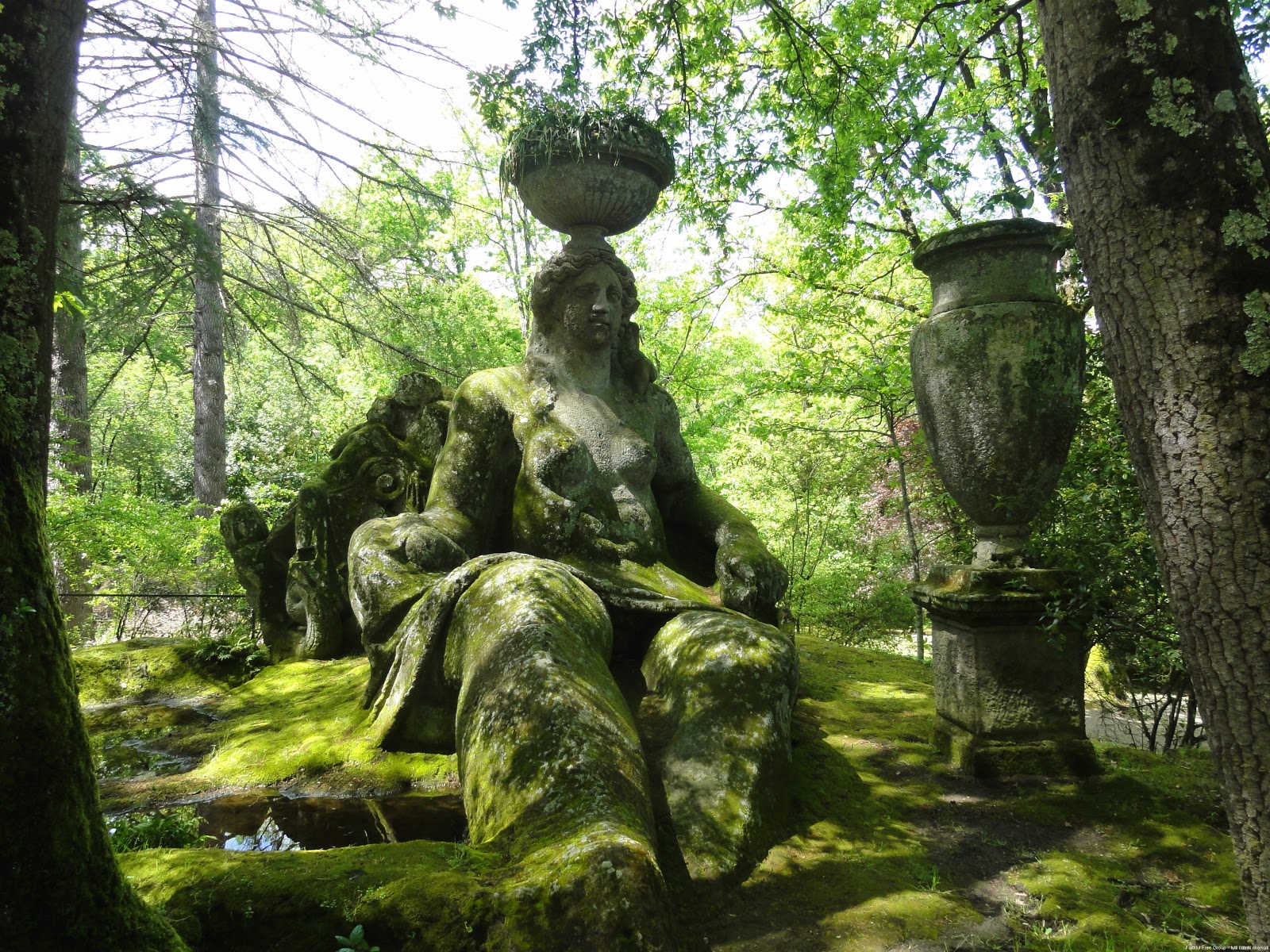
Gardens of Bomarzo
The Sacro Bosco ("Sacred Grove"), colloquially called Park of the Monsters (Parco dei Mostri in Italian), also named Garden of Bomarzo, is a Manieristic monumental complex located in Bomarzo, in the province of Viterbo, in northern Lazio, Italy. About an hour outside of Rome.
The garden was created during the 16th century. The garden is situated in a woods, located in a valley bottom, beneath the castle of Orsini, and populated by sculptures, and small buildings, located among the natural vegetation.
The park's name stems from the many larger-than-life sculptures, some sculpted in the bedrock, which populate this predominantly barren landscape. It is the work of Pier Francesco Orsini, called Vicino, a 16th-century condottiero, and patron of the arts, greatly devoted to his wife Giulia Farnese (not to be confused with her maternal grandmother Giulia Farnese, the mistress of Pope Alexander VI). When Orsini's wife died, he created the gardens to cope with his grief. The design is attributed to Pirro Ligorio, and the sculptures to Simone Moschino.
During the 19th century, and deep into the 20th, the garden became overgrown and neglected, but after the Spanish painter Salvador Dalí made a short movie about the park, and completed a painting actually based on the park in the 1950s, the Bettini family implemented a restoration program which lasted throughout the 1970s, and today the garden, which remains private property, is a major tourist attraction.
The park of Bomarzo was intended not to please, but to astonish, and like many Mannerist works of art, its symbolism is arcane: examples are a large sculpture of one of Hannibal's war elephants, which mangles a Roman legionary, or the statue of Ceres lounging on the bare ground, with a vase of verdure perched on her head.
The many monstrous statues appear to be unconnected to any rational plan, and appear to have been strewn almost randomly about the area, sol per sfogare il Core ("just to set the heart free") as one inscription in the obelisks says.
Allusive verses in Italian by Annibal Caro (the first one is of him, in 1564), Bitussi, and Cristoforo Madruzzo, some of them now eroded, were inscribed beside the sculptures.
The reason for the layout and design of the garden is largely unknown: perhaps they were meant as a foil to the perfect symmetry and layout of the great Renaissance gardens nearby at Villa Farnese, and Villa Lante. Next to a formal exit gate is a tilting watchtower-like casina, the so-called Casa Pendente ("Leaning House").

  • Niki de Saint Phalle was inspired by Bomarzo for her Tarot Garden, Giardino dei Tarocchi.
  • The story behind Bomarzo and the life of Pier Francesco Orsini are the subject of a novel by the Argentinian writer Manuel Mujica Láinez, Bomarzo (1962). Mujica Láinez himself wrote a libretto based on his novel, which was set to music by Alberto Ginastera (1967). The opera Bomarzo premièred in Washington in 1967, since the Argentine government had condemned it as sexually offensive.
  • A reimagined version of the garden is the centerpiece of the novel A Green and Ancient Light, written by Frederic S. Durbin.
Lazio comprises a land area of 17,236 km2 (6,655 sq mi) and it has borders with Tuscany, Umbria, and Marche to the north, Abruzzo and Molise to the east, Campania to the south, and the Tyrrhenian Sea to the west. Tyrrhenian Sea is named for the Tyrrhenian people, identified since the 6th century BCE with the Etruscans of Italy.Its name derives from the Greek name for the Etruscans, who were said to be emigrants from Lydia and led by the prince Tyrrhenus. The Etruscans settled along the coast of modern Tuscany and referred to the water as the "Sea of the Etruscans".
In Etruscan mythology, Tyrrhenus was one of the founders of the Etruscan League of twelve cities, along with his brother Tarchon. Herodotus describes him as the saviour of the Etruscans, because he led them from Lydia to Etruria. His name was given to the Etruscan people by the Greeks. The Romans extended this use to the sea west of Etruria: the Tyrrhenian Sea.
Etruscan religion and mythology were partly incorporated into classical Roman culture, including the Roman pantheon. The Senate adopted key elements of their religion, which were perpetuated by haruspices and noble Roman families who claimed Etruscan descent, long after the general population had forgotten the language. 
Echidna, The Lions And The Fury.

Long after the assimilation of the Etruscans, Seneca the Younger said that the difference between the Romans and the Etruscans was that

Whereas we believe lightning to be released as a result of the collision of clouds, they believe that the clouds collide so as to release lightning: for as they attribute all to deity, they are led to believe not that things have a meaning insofar as they occur, but rather that they occur because they must have a meaning.

More Here


Love and light,
Trace
xoxo

The Paper Unicorn ~ New Novel Inspiration

Elian and Felicity
 Elian Trevelyan ~ Felicity Campbell
💕
Work in progress
The Paper Unicorn ~ Fantasy Novel
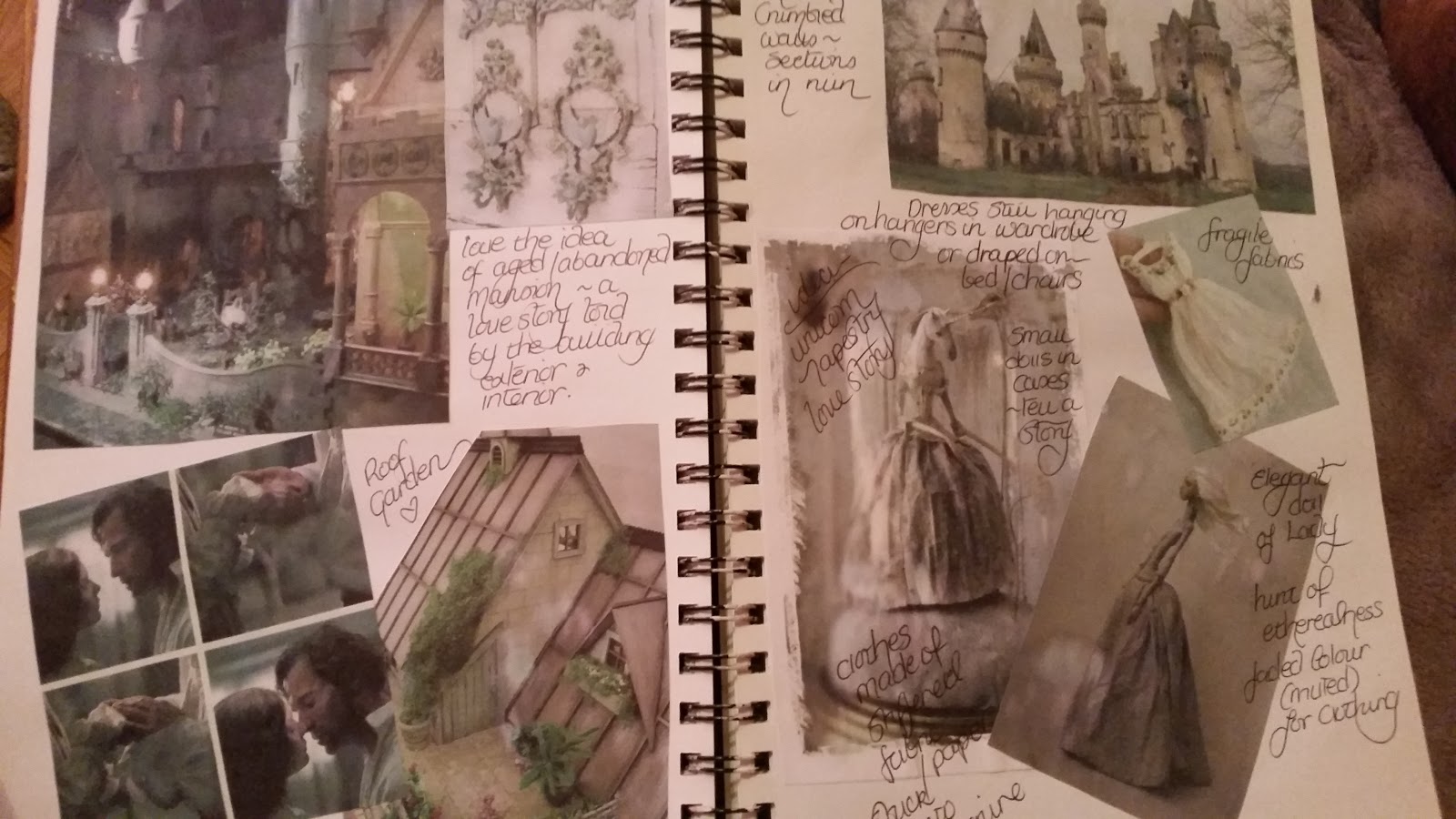
Inspiration Journal
Quick scribbles of creative flow
Arty pages
Two characters come to life when Clara, a young woman from London, inherits an old manor house left to her by a stranger.

On moving in, her own life becomes entwined with that of a beautiful love story previously lost within the manor's stone walls.

Clara questions the intentions of the mysterious benefactor. Did the person know of the lovers? But more importantly, why was everything left to her? What is the connection between them?

The story presented itself when I was creating a visual reference journal for a dolls house. The magic happens like that. Visuals and songs play through my mind and the new characters come alive. This story is quite different to 'A Carpet of Purple Flowers' but spiritual connections are still there. ;o) 
A romance that travels through time ~ the painting of characters
Music to tease the senses
Love and light,
Trace
xoxo

Monday, 6 February 2017

The Paper Unicorn ~ Novel

The Paper Unicorn
The Forgotten Manor 
Miss Felicity Campbell

A butterfly landed
Hearts seeking love ~ Minds independent and strong
The name is derived from an alteration of Aelianus (Latin), Elianus (Latin) or Helianus (Latin), which are ultimately of the Greek 'Helios'. 
A touch replaces words
Two people free of ancient boundaries
Can Clara make sense of the English Manor she inherited?

Love and light,
Trace
xoxo

Sunday, 5 February 2017

Unicorn Foklore

Searching for unicorn myths is a bit like searching for unicorns themselves.  
The unicorn is a legendary creature that has been described since antiquity as a beast with a large, pointed, spiralling horn projecting from its forehead. The unicorn was depicted in ancient seals of the Indus Valley Civilization and was mentioned by the ancient Greeks in accounts of natural history by various writers, including Ctesias, Strabo, Pliny the Younger, and Aelian. The Bible also describes an animal, the re'em (auroch), which some versions translate as a unicorn.
In European folklore, the unicorn is often depicted as a white horse-like or goat-like animal with a long horn and cloven hooves (sometimes a goat's beard). In the Middle Ages and Renaissance, it was commonly described as an extremely wild woodland creature, a symbol of purity and grace, which could only be captured by a virgin. In the encyclopaedias, its horn was said to have the power to render poisoned water potable and to heal sickness. In medieval and Renaissance times, the tusk of the narwhal was sometimes sold as unicorn horn.
The truth is, unlike almost every single other mythical creature, the unicorn does not appear anywhere in any culture's actual mythology.  That is to say, plenty of Greek scholars believed that unicorns existed, but the unicorn itself does not come from Greek mythology.  There are no tales of gods riding unicorns or legends of unicorns fighting monsters.

To put it simply, as far as ancient myths are concerned, there is no such thing as 'unicorn mythology'.
Greek scholars actually believed that this creature was real, noted in the accounts of natural history and that it made its home in India.  At the time, India was a little known distant land that seemed magical and mysterious to the ancient Greeks and Romans.  Fittingly, the unicorn was seen as a mystical and mysterious creature who commanded great respect and power.

This is not unlike the griffin, who many ancient Greeks also believed came from India.  And like the griffin, very few specific tales can be told about the unicorn, despite its popularity around the world.

The strangest part has to be the fact that ancient scholars believed that unicorns were real.  While this is true of other mythical creatures, unicorns are unique in that they aren't from mythology.  For example, ancient people might believe that a Pegasus, the winged horse of Bellerophon, was real because there was a specific myth that spoke of him.  The unicorn, on the other hand, has no such myth, so where does the belief in unicorns come from?
One scholar pointed out an interesting fact about unicorns - they are possibly the only mythical creature that is not based on human fears.  Unicorns are not monsters.  Anytime they are spoken of in ancient texts they are revered and respected.  They are strong, solitary animals who seek to do good for all around them.  Never does a unicorn pose a threat to humans, or any other creature that does not seek first to harm them.
For a creature that came from nowhere, never really existed, and has no real origin, the unicorn has lasted an unbelievable amount of time in the imaginations of the human race.  There really is no parallel.
Source HERE
The Maiden and the Unicorn by Domenichino, 1602.
The unicorn, tamable only by a virgin woman, was well established in medieval lore.

One traditional method of hunting unicorns that involved entrapment by a virgin.
In one of his notebooks, Leonardo da Vinci wrote:

The unicorn, through its intemperance and not knowing how to control itself, for the love it bears to fair maidens forgets its ferocity and wildness; and laying aside all fear it will go up to a seated damsel and go to sleep in her lap, and thus the hunters take it.
A Maiden with a Unicorn by Leonardo da Vinci.
Interpretations of the unicorn myth focus on the medieval lore of beguiled (charm or enchant (someone), often in a deceptive way) lovers. The unicorn also figured in courtly terms: for some 13th-century French authors such as Thibaut of Champagne and Richard de Fournival, the lover is attracted to his lady as the unicorn is to the virgin.

The Throne Chair of Denmark is made of "unicorn horns" – almost certainly narwhal tusks. It is guarded by three life-size silver lions, based on Biblical references, and was a symbol of the absolute monarchy of the Twin Kingdoms. The same material was used for ceremonial cups because the unicorn's horn continued to be believed to neutralise poison.The horn itself and the substance it was made of was called alicorn, and it was believed that the horn holds magical and medicinal properties.
There are famous late Gothic series of seven tapestry hangings The Hunt of the Unicorn.
Another famous set of six tapestries of Dame à la licorne ("Lady with the unicorn") in the Musée de Cluny, Paris, were also woven in the Southern Netherlands before 1500, and show the five senses (the gateways to temptation) and finally Love ("A mon seul desir" the legend reads), with unicorns featured in each piece. Facsimiles of these unicorn tapestries are currently being woven for permanent display in Stirling Castle, Scotland, to take the place of a set recorded in the castle in a 16th-century inventory.
In heraldry, the unicorn is best known as the symbol of Scotland. The unicorn was chosen because it was seen as a proud and haughty beast which would rather die than be captured, just as Scots would fight to remain sovereign and unconquered. Two unicorns supported the royal arms of the King of Scots, and since the 1707 union of England and Scotland, the royal arms of the United Kingdom have been supported by a unicorn along with an English lion. Two versions of the royal arms exist: that used in Scotland gives more emphasis to the Scottish elements, placing the unicorn on the left and giving it a crown, whereas the version used in England and elsewhere gives the English elements more prominence.

My interest has grown in the unicorn and this mystical creature has inspired a new novel called 'The Paper Unicorn'. I'm really excited about this story, it is quite different to my others. However, I must complete book two for publishing this year 'A Carpet of Purple Flowers' series and then I'm free to play with this idea. Can't wait. :o) Meanwhile, in my spare time I'm compiling a mood book so I don't lose track of the tale. I'll share pieces that I create here on the blog.
Love and light,
Trace
xoxo