Sunday, 14 August 2016

The men of the night watch ~ A piece of history

Today it is hard to believe that Britain in the 19th century did not have a professional police force.
It wasn’t until 1822, when Sir Robert Peel (1788-1850) became Home Secretary, that this was finally considered. Nonetheless, it took another seven years before anything happened.
The first policemen, known as 'Peelers' or 'Bobbies', were set up in London in 1829 by Robert Peel, the then Home Secretary.
He finally introduced an Act of Parliament, the Metropolitan Police Act, in 1829. It established the Metropolitan Police of London (with the exception of the City), replacing the previously disorganised system of parish constables and watchmen.
The first thousand of Peel’s police, known as ‘Peelers’ (Robert PEEL) or ‘Bobbies’ (Robert or BOBBY Peel), dressed in blue tailcoats and top hats, began to patrol the streets of London on 29th September 1829. The uniform was carefully selected to make the ‘Peelers’ look more like ordinary citizens, rather than a red-coated soldier with a helmet.
The ‘Peelers’ were issued with a wooden truncheon carried in a long pocket in the tail of their coat, a pair of handcuffs and a wooden rattle to raise the alarm. By the 1880s this rattle had been replaced by a whistle.
Peeler cartoon
To be a ‘Peeler’ the rules were quite strict. You had to be aged 20 – 27, at least 5′ 7″ tall (or as near as possible), fit, literate and have no history of any wrong-doings.
They worked seven days a week, with only five days unpaid holiday a year for which they received the grand sum of £1 per week. Their lives were strictly controlled; they were not allowed to vote in elections and required permission to get married and even to share a meal with a civilian. To allay the public’s suspicion of being spied upon, officers were required to wear their uniforms both on and off duty.  Source ~ HERE
Manchester City Police peelers parade in the yard of the city's Albert Street Police Station in the 1850s.
Earlier history
Before the passing of the Metropolitan Police Act in 1829, law enforcement among the general population in England was carried out by unpaid parish constables who were elected, and later appointed by the local justice of the peace.In certain circumstances, such as serious public disorder, the army would intervene to support the local authorities; yeomanry  (a number of units or sub-units of the British Army Reserve, descended from volunteer cavalry regiments) were extensively used for this purpose before police forces developed.
Law enforcement and policing during the 1700s, and earlier, were not administrated nationally, instead, they were organised by local communities such as town authorities. Within local areas, a constable could be attested by two or more Justices of the Peace, a procedure that some sources say had its roots in an Act of the Parliament of England of 1673. From the 1730s, local improvement Acts made by town authorities often included provision for paid watchmen or constables to patrol towns at night, while rural areas had to rely on more informal arrangements.
Because this system of policing was largely unorganised and lacked a criminal investigation capability, the novelist Henry Fielding (who had been appointed a Magistrate in 1748) introduced the first detective force, known as the Bow Street Runners, ( originally numbering six men) in 1753.
In 1737, an Act of Parliament was passed "for better regulating the Night Watch" of the City of London which specified the number of paid constables that should be on duty each night. Henry Fielding established the Bow Street Runners in 1749; between 1754 and 1780, Sir John Fielding reorganised Bow Street like a police station, with a team of efficient, paid constables.
In the early 1800s, some town authorities became more involved in improving local policing. An Act of Parliament in 1800 enabled Glasgow to establish the City of Glasgow Police, often described as the first professional police force in Britain. As the population in industrial towns grew, more local Acts were passed to improve policing arrangements in those towns
London in the early 1800s had a population of nearly a million and a half people but was policed by only 450 constables and 4,500-night watchmen.
Bow street runners
Watchmen were groups of men, usually authorised by a state, government, or society, to deter criminal activity and provide law enforcement. Watchmen have existed in various guises throughout the world and were generally succeeded by the emergence of formally organised policing.
Police paddy wagon and horse from late 19th century in London
Policemen gathered in Bonner's Fields, London, during the Chartist revival of 1848.
Covent Garden watch house
Early origins of The Watchmen
An early reference to a watch can be found in the Bible where the Prophet Ezekiel states that it was the duty of the watch to blow the horn and sound the alarm. (Ezekiel 33:1-6)
The existence of watchmen has also been found[specify] in the Ottoman, Greek and Egyptian Empires.
The Roman Empire turned the role of a watchman into a profession by creating two organisations:

  • the Praetorian Guard thus establishing a rank and file system with a Captain of the Guard.
  • Vigiles, literally the watch.

A Night Watchman. By Thomas Dekker from The Belman of London (1608).
Watchmen in England
The streets in London were dark and had the shortage and poor quality of artificial light. It had been recognized for centuries that the coming of darkness to the unlit streets of a town brought a heightened threat of danger, that the night cover to the disorderly and immoral, and to those bent on robbery or burglary or who in other ways threatened physical harm to people in the streets and in their houses.
Watchmen were nicknamed "Charleys" after King Charles II.
The anxieties that darkness gave rise to had been met by the formation of a night watch in the 13th century, and by the rules about who could use the streets after dark. These rules had for long been underpinned in London and other towns by the curfew, the time (announced by the ringing of a bell) at which the gates closed and the streets were cleared. Only people with good reason to be abroad could then travel through the City. Anyone outside at night without reason or permission was suspicious and potentially criminal.
Couldn't resist adding ;o) 
Allowances were usually made for people who had some social status on their side. Lord Fielding clearly expected to pass through London’s streets untroubled at 1 am one night in 1641, and he quickly became piqued when his coach was stopped by the watch, shouting huffily that it was a ‘disgrace’ to stop someone of such high standing as he, and telling the constable in charge of the watch that he would box him on the ears if he did not let his coach carry on back to his house. ‘It is impossible’ to ‘distinguish a lord from another man by the outside of a coach’, the constable said later in his defence, ‘especially at unreasonable times’.
The Ordinance of 1233 required the appointment of watchmen. The Assize of Arms of 1252, which required the appointment of constables to summon men to arms, quell breaches of the peace, and to deliver offenders to the sheriff, is cited as one of the earliest creations of an English police force, as was the Statute of Winchester of 1285. In 1252 a royal writ established a Watch and Ward with royal officers appointed as Shire Reeves:

By order of the King of England the Winchester Act Mandating The Watch. Part Four and the King commandth that from henceforth all Watches be made as it hath been used in past times that was to wit from the day of Ascension unto the day of St. Michael in every city by six men at every gate in every borough by twelve men in every town by six or four according to the number of inhabitants of the town. They shall keep the Watch all night from sun setting unto sun rising. And if any stranger do pass them by them he shall be arrested until morning and if no suspicion be found he shall go quit.
London before the formation of the 'Peelers' who where the world's first police force. A Watchman, pictured outside his watch box, said to be Charlie Rouse, one of the last of the watchmen. The cutlass is an interesting flourish.
The watchmen patrolled the streets at night, calling out the hour, keeping a lookout for fires, checking that doors were locked and ensuring that drunks and other vagrants were delivered to the watch constable. However, their low wages and the uncongenial nature of the job attracted a fairly low standard of person, and they acquired a possibly exaggerated reputation for being old, ineffectual, feeble, drunk or asleep on the job.
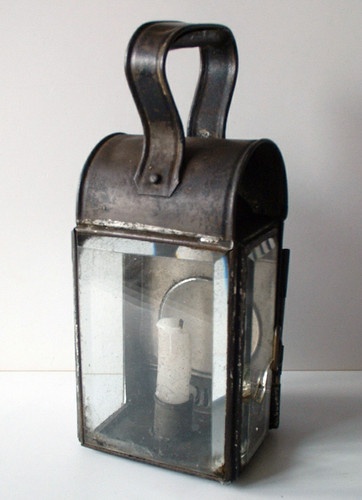
The interior of a watch-house with night watchmen in large overcoats with lanterns.
London had a system of night policing in place before 1660, although it was improved over the next century through better lighting, administrations, finances, and better and more regular salaries. But the essential elements of the night-watch were performing completely by the middle of the seventeenth century.
A watchman's sentry box. Situated in Norfolk Crescent, Bath, beside a grassy expanse and opposite the Georgian terrace, Cumberland House, this circular structure (erected in 1793 and restored in 1896) 
During the 1820s, mounting crime levels and increasing political and industrial disorder prompted calls for reform, led by Sir Robert Peel, which culminated in the demise of the watchmen and their replacement by a uniformed metropolitan police force.
Watch-boxes increased in number during Queen Anne's reign. Made of timber or stone, the wooden ones provided targets for bored young "gentlemen" who tipped them over (and the snoozing watchman within) for sport.
Watchmen and modern police
With the unification of laws and centralization of state power (e.g. the Municipal Police Act of 1844 in New York City, United States), such formations became increasingly incorporated into state-run police force (see metropolitan police and municipal police).
Watchmen still exist under Florida statutes and are recognised / given special dispensation in law 
Since the 1960s, police forces in the United Kingdom have been merged and modernised by several Acts of Parliament.
A suffragette arrested, London, 1910
Mrs Edith Margaret Garrud (1872-1971) was the suffragette who taught the other suffragettes jiu-jitsu and ran a dojo with her daughter.
Officers and a detective of Manchester City Police taken outside their police station in Newton Heath, circa 1880
2002: Police Reform Act 2002. Introduced Community Support Officers, commonly referred to as Police Community Support Officers (PCSOs) notwithstanding that this term does not appear in any legislation, as well as investigating officers and detention escort officers - all in England and Wales only. None of these are Police Constables although they have certain specific powers of a constable, e.g. in relation to lawful detention.
2006: Major provisions of the Serious Organised Crime and Police Act 2005 come into effect including the overhaul of powers of arrest, Institution of the Serious Organised Crime Agency and extension of powers available to PCSOs; these (other than SOCA) applying in England and Wales. The majority of the Act applies only to England and Wales with only a few sections applying to Scotland or Northern Ireland. In Scotland, the Police, Public Order and Criminal Justice (Scotland) Act 2006 comes into force.The Serious Organised Crime Agency (SOCA) was a non-departmental public body of the Government of the United Kingdom which existed from 1 April 2006 until 7 October 2013. 
Children observing the attire of police officers, two clad in body armour, London.
2013: Amalgamation of 8 Scottish territorial police forces into one, Police Scotland.
2013: The National Crime Agency (NCA) leads the UK law enforcement's fight to cut serious and organised crime. The NCA became operational in October 2013.
NCA
More Peeler History HERE
The Whimsical Watcher 
Love and light,
Trace
xoxo

Saturday, 13 August 2016

INFP ~ Personality Type

INFP is an abbreviation used in the publications of the Myers-Briggs Type Indicator to refer to one of sixteen personality types. The MBTI was developed from the work of prominent psychiatrist Carl G. Jung in his book Psychological Types. (Wikipedia)
Stands for: Introversion (I), Intuition (N), Feeling (F), Perception (P)
INFP personalities are true idealists, always looking for the hint of good in even the worst of people and events, searching for ways to make things better. While they may be perceived as calm, reserved, or even shy, INFPs have an inner flame and passion that can truly shine. Comprising just 4% of the population, the risk of feeling misunderstood is, unfortunately, high for the INFP personality type – but when they find like-minded people to spend their time with, the harmony they feel will be a fountain of joy and inspiration.
INFP in a Nutshell
INFPs are imaginative idealists, guided by their own core values and beliefs. To a Healer, possibilities are paramount; the realism of the moment is only of passing concern. They see the potential for a better future and pursue truth and meaning with their own individual flair.
INFPs are sensitive, caring, and compassionate, and are deeply concerned with the personal growth of themselves and others. Individualistic and nonjudgmental, INFPs believe that each person must find their own path. They enjoy spending time exploring their own ideas and values, and are gently encouraging to others to do the same. INFPs are creative and often artistic; they enjoy finding new outlets for self-expression.
INFP in a Nutshell
INFPs are imaginative idealists, guided by their own core values and beliefs. To a Healer, possibilities are paramount; the realism of the moment is only of passing concern. They see potential for a better future, and pursue truth and meaning with their own individual flair.
INFPs are sensitive, caring, and compassionate, and are deeply concerned with the personal growth of themselves and others. Individualistic and nonjudgmental, INFPs believe that each person must find their own path. They enjoy spending time exploring their own ideas and values, and are gently encouraging to others to do the same. INFPs are creative and often artistic; they enjoy finding new outlets for self-expression.
What Makes the INFP Tick
INFPs value authenticity and want to be original and individual in what they do. They are often concerned with a search for meaning and truth within themselves. Following tradition holds little appeal for the INFP; they prefer to do their own exploration of values and ideas, and decide for themselves what seems right. INFPs are often offbeat and unconventional, but they feel no desire to conform. The INFP would rather be true to themselves than try to fit in with the crowd.

INFPs are accepting and nonjudgmental in their treatment of others, believing that each person must follow their own path. They are flexible and accommodating, and can often see many points of view. It is important to the INFP to support other people; however, the INFP may react strongly if they feel their own values are being violated. They especially hate being steamrolled by people who insist there is one right way to do things. INFPs want an open, supportive exchange of ideas.
 
Recognising the INFP
INFPs may initially seem cool, as they reserve their most authentic thoughts and feelings for people they know well. They are reflective and often spiritual, and often interested in having meaningful conversations about values, ethics, people, and personal growth. Typically curious and open-minded, the Healer continually seeks a deeper understanding of themselves and of the people around them. They are passionate about their ideals, but private as well; few people understand the depth of the INFP’s commitment to their beliefs.
INFPs are sensitive and empathetic, and engage themselves in a lifelong quest for meaning and authenticity. The mundane aspects of life are of less interest to this type, and they are more excited by interesting ideas than by practical facts. They typically accept others without question, and may take special interest in offbeat points of view or alternative lifestyles. They often have a special affection for the arts, especially the avant garde, as they love experiencing new concepts in self-expression.
Famous INFPs
Famous INFPs include Princess Diana, Audrey Hepburn, Fred Rogers, John Lennon, Kurt Cobain, Tori Amos, Morrissey, Chloe Sevigny, William Shakespeare, Bill Watterson, A.A. Milne, Helen Keller, Carl Rogers, and Isabel Briggs Myers (creator of the Myers-Briggs Type Indicator).
INFP in the Population
INFP is the ninth most common type in the population. They make up:
4% of the general population
5% of women
4% of men
Popular Hobbies for the INFP
Popular hobbies for INFPs include poetry, creative writing, music, photography, theatre, and visual art.
Quotes About INFP
"INFPs excel in fields that deal with possibilities for people."
- Isabel Briggs Myers, Gifts Differing
"Healers care deeply—passionately—about a few special persons or a favourite cause, and their fervent aim is to bring peace to the world and wholeness to themselves and their loved ones."
- David Keirsey, Please Understand Me II
"Clearly, INFPs are best when whatever they're doing serves their personal values."
- Otto Kroeger, Type Talk at Work
 
INFP Communication Style
INFPs are gentle, encouraging communicators who enjoy exploring options and ideas. They envision possibilities for people and are often good at coming up with creative, flexible solutions to problems. They are typically attentive listeners who try to adapt their communication style to the people they are dealing with. Compassionate and cooperative, they tend to be appreciative of other people and their ideas, although they may be reserved about sharing their own closely held values and ideas with people they do not know well.
INFP in Love
In relationships, the INFP is nurturing, empathic, and loyal. Healers select their friends and partners carefully, looking for a strong bond and congruent values. They are self-aware and often spiritual.
INFPs tend to be open-minded and accepting of another's behaviour and preferences, so long as their core values are not violated. They support their partners' individuality and encourage them to explore their interests and ideas.
INFPs look for ways to compromise and accommodate other people and often have creative solutions to interpersonal problems. They can be very sensitive, but often keep negative reactions to themselves because they are reluctant to engage in confrontation.
Close and harmonious relationships are important to INFPs, although they also need a lot of independent time to think and reflect. They often want plenty of freedom to express themselves and pursue greater self-awareness. They value a partner who is committed and loving, yet provides them with the support they need to independently explore the mysteries of life.
INFP as Parents
As parents, INFPs are caring, supportive, and adaptable. They rarely establish a strict or structured household, preferring instead to address problems and situations as they arise. They often allow their children a lot of latitude and influence in making decisions, and may leave the creation and enforcement of household rules up to another parent.
Children of INFPs often find that they have the freedom to express themselves and make their own decisions until they violate their INFP parent's values. When values are in question, the Healer parent becomes firm and inflexible.
 
INFP at Work
At work, the INFP is not particularly driven by money or status, preferring work that aligns with their personal values and allows them to help others. INFPs are typically motivated by vision and inspiration and want to engage with projects and causes that feel important to them.
INFPs enjoy the process of creative problem-solving and want to understand complex issues. They appreciate innovation and want to come up with original ideas to improve circumstances for people. An ideal job for a Healer allows them to express their individuality in the way they work and takes advantage of their ability to see unique solutions.
INFPs enjoy working autonomously and having control over how and when to complete a project. They often enjoy participating in teams, although they want to be free to put their own personal stamp on their work. When they do work with other people, it's important to the INFP that they be cooperative, supportive, and flexible, and that they have a similar passion for their ideals.
Top careers for the INFP include:
ARTS AND DESIGN
Fine Artist
Fashion Designer
Graphic Designer
Multimedia Artist or Animator
COMMUNITY AND SOCIAL SERVICE
Mental Health Counselor
School or Career Counselor
Community Service Manager
Social Worker
EDUCATION AND LIBRARY
Archivist or Curator
Elementary School Teacher
Librarian
Preschool Teacher
Professor or College Instructor
Special Education Teacher
HEALTH CARE
Audiologist
Chiropractor
Nutritionist
Genetic Counselor
Massage Therapist
Midwife
Occupational Therapist
Physical Therapist
Speech-Language Pathologist
Veterinarian
Veterinary Technician
BUSINESS AND MANAGEMENT
Fundraiser
Human Resources Specialist
Training or Development Manager
SCIENCES
Anthropologist or Archaeologist
Geographer
Historian
Psychologist
Sociologist
Zoologist or Wildlife Biologist
COMMUNICATIONS
Editor
Film Editor
Interpreter or Translator
Photographer
Public Relations Specialist
Writer
SOURCE: HERE
Info and Websites for INFPs: HERE
Love and light,
Trace
xoxo

Monday, 11 July 2016

Have you tried to work on multiple book projects at the same time?


Hi, everyone. :o) 
Lately, I've been busy editing book two. My kitchen table is covered with many handwritten notes that need slipping into place in the manuscript, to ready for typing up. This task has been made more difficult as the pile of scribbled notes dropped and got mixed up. They usually live in Ikea box files but I left them in a pile overnight on the living room table, yup, big mistake. But, all is well as I mentally prepare myself for the paper battle. :o) 
While writing book two, another story flowed from the muse. I tried to ignore the visuals that played over in my mind, but they refused to remain silent. So there it is, I got side-tracked for a while on outlining 'Shining Sword', a story that will compliment the series and follow the future path of book two, so it is in fact, very relevant. I'm itching to start the manuscript but must stay focused on editing 'Awake in Purple Dreams'. It has been tough ignoring the temptation to start writing, though. Has anyone else had this experience?
I decided to google the question of writing two books at once. Below are what other authors have experienced. 
“I’m currently working on two novels – one is the sequel to a finished book that is currently looking for a publisher. The other is a project that is very much in my mind at the moment and won’t wait its turn! The first is about 42k words done and the second is only a couple of thousand words written, but I’ve been making extensive notes and plans. As the 42k project is the sequel to something currently before publishers, I’m making that my priority, and trying not to be too distracted by the other one. But when ideas won’t leave you alone, you have to at least make notes and rough outlines of scenes. So I would say that I’m working properly on one novel while working part-time on the other!” Alan Baxter, dark fantasy author.

Write them all. I have two I’m working on now. I’ve had as many as 4 at a time in my head. You have to let the ideas out.@lynnleite

Make an idea book where you can take a little time to put down info about the ideas you aren’t ready to work on. @druchunas

Plot them all, write chapter-by-chapter summaries and then go back to writing just one. That or work 24/7 til they’re done. @graywave

Keep feeding all 3 until 1 takes the lead (attention, energy). Then focus on that one, get to others afterwards. Good luck!@MsMartha_writer

What I always do in that situation is write down key events, maybe write a full scene, so you can go back to it later. @NatashaMcNeely
Source: HERE

The strategy of writing one book in the morning and revising another book in the evening is intriguing.

It usually takes me four months to write a first draft. For the last couple of months I grow wearing of writing and pine to revise. Then it takes me about a year to revise. After a couple of months, I yearn to write a new story. I wonder if working on two books at once would be more satisfying. It will then take me eight months to write a rough and two more years to edit. Yeah, I'll have two books done instead of just one, but the long time spans are intimidating.

I have several books currently in progress. In fact, I've found I'm usually working on multiple books at the same time. I usually don't work on more than one in a day, though. I'll work one for a while, drop it if I have to work some issues out and pick up one of the others.
Sometimes it works wonderfully and sometimes I have to completely re-read things and get back into the saddle of one of the ones I've set aside for a while.

I used to be a one-book-at-a-time writer, but gradually I'm shifting into having multiple projects going at the same time. This can be beneficial for a variety of reasons. One is simply that you'll have a variety of things to work on and hopefully won't get bored as easily. Another reason is, inevitably, you'll have projects at different stages of completion. Say you get a book published; if you only do one at a time, well, your readers then might have to wait a looong time to see another one from you. But if you've already been working that project, maybe the rough draft is done and you're already well into the revisions. They won't have to wait as long for it to be published.

One book about writing novels I read suggested that you should have at least three projects going at any one time. Ideally, once you've been working for awhile, one should be querying for an agent or with an agent; another in the revision stages; and a third in the rough draft/first draft stages.

One of the positive things about having several unfinished works in progress at the same time is if you get bored or blocked with one, you can work on another. You don't have to risk poorer writing if you're just not into something, or risk dropping it and not writing for a while.

I've got two novels that I'm writing at the moment, another that's requiring significantly more planning and research that I'll hopefully start once these two have first drafts finished. The two I have going at the moment have such different voices and genres that the chances of me not wanting to work on at least one of them is slim to none.

This is a really good point. I usually work on one project at a time but like others have said, I'm in the mood to write when I'm revising and to revise when I'm writing. I might start thinking more about the future and try to find a way to juggle that second project.

I find that the very act of writing lets me come up with more things to write about. I'll be working on one story, I'll hit a dead end and the process of deciding where I want to go next creates alternative ideas. These ideas often broil together into entirely new plot ideas or story premises.
Just from the act of writing my last two novels, I have about five new stories in several different genres, including ghosts, pirates, sci-fi, fantasy, romance and general fiction.
Source: HERE
Uncle Barry’s Formula for Writing Multiple Books at Once 

  • Your projects must all be vastly different from each other: If you’re working on more than one book at a time, it’s deadly to have them be similar. Look at it this way — say you’re writing a dystopian novel. And at the same time, you’re working on another dystopian novel…but it’s just a different kind of dystopia. Well, I think you see the problem. When you get burned out on one, the other one is no safe haven. They’re different books, but they’re too similar. They use the same psychic muscles. Make your projects distinct from one another and each one will act as a sort of safety valve for the others. Bored with that thriller you’re working on? Skip over to the romantic comedy for a little while!
  • Always be at a different stage on each project: Again, this is about overworking muscles. Starting a book uses a different set of mental abilities than editing one or cruising to the end of one or researching one. So stagger your projects. At the beginning of 2010, I was revising my graphic novel script. At the same time, though, I was deep into the first draft of The Book That Will Kill Me. And I was researching I Hunt Killers. Later in the year, I was halfway through the first draft of Killers when I started writing the second Archvillain. Simultaneously, I was overseeing Colleen’s art on the graphic novel and headed toward the end of a draft of The Book That Will Kill Me. Once again, each book acted as a pressure release for all the others. No matter what I was working on, it was different and varied from what I had just been working on earlier that day or week.
  • Turn everything in early: This is a tough one for many authors, who have difficulty meeting their deadlines already. But I swear to you, it matters. When you have so many projects on your plate, it’s inevitable that two or more deadlines are going to overlap or conflict. This means that if you slip on one deadline, you’ll put multiple projects in jeopardy. And if you think being in the weeds on one book is bad, try it on many! In order to keep yourself honest and to prevent a total meltdown, turn in everything early. Set your own deadlines that are well in advance of the official ones and follow your deadlines, no one else’s.
  • Let no one else dictate your schedule: Closely linked to #4, obviously. But it’s important enough to call out on its own. In addition to not letting anyone else dictate a deadline to you, you also can’t allow anyone else’s whims to stall you in developing a project. Here’s an example: Say you have just turned a new book to your editor. You have another project you’d like to get started on, but your editor has told you that she will get back to you on the first book in a couple of weeks. You think to yourself, “Well, I won’t make much progress on the new project in just a couple of weeks, so I’ll wait to hear from my editor and THEN I’ll start on the new one.” No! Odds are, it will take longer than a couple of weeks for your editor to get back to you. And even if it IS just a couple of weeks, that’s still time you’re wasting, time when you could make at least some progress on the new project. So plunge into the new project and let your editor get back to you whenever she can.
  • Be flexible: When I work on multiple projects, I tell myself, “OK, by this point in time, I need to have made X amount of progress on these three projects.” And so on. I manage to stick to that pretty well. But writing a bunch of books at once isn’t the easiest thing in the world, so you need to be flexible. Allow yourself to spend an extra few days on something if you’re really feeling it. Give yourself a week off to play Xbox if you’re starting to feel dangerously loopy. If you work on comedy in the morning and drama in the afternoon, switch it up every now and then in order to give yourself a break. Flexibility will keep you from cracking up entirely.

Source: HERE
Love and light,
Trace
xoxo